Book binding for beginners: conservation training
-
Author
- micheledrisse
-
Published Date
- November 18, 2013
Written by Claire Wooldridge, UMASCS Graduate Trainee Library Assistant
As the library graduate trainee here at the University of Reading’s Special Collections Service, I am fortunate enough to get lots of opportunities for training in all aspects of rare books, from manufacture and repair, to descriptive cataloguing, to their use in publications and for social media.

In the last few weeks I have been having training sessions with Geoff, our conservation and preservation manager at the main campus library. Geoff has been training me in order that I can assist him and his preservation team by conducting some small book repairs here at special collections. In time I will be doing paper and binding repairs and preservation, including reattaching boards and sewing in gatherings. Sadly old books do become damaged with time and use… an inevitable development but one which also provides me with plenty of material to work on. Never fear – my practice books are strictly those withdrawn from circulation!
As Geoff has taught me – the most important part of preservation of rare books is using water soluble materials, meaning a repair can be reversed if necessary. So that means Japanese paper and paste, no superglue or Sellotape!
In order to understand how to repair the book Geoff has been teaching and showing me how a book is made. As a complete beginner this training is invaluable to me and is significantly improving my understanding and appreciation of all aspects of the importance of the book as a physical object, besides the significance of the content, author and so on.

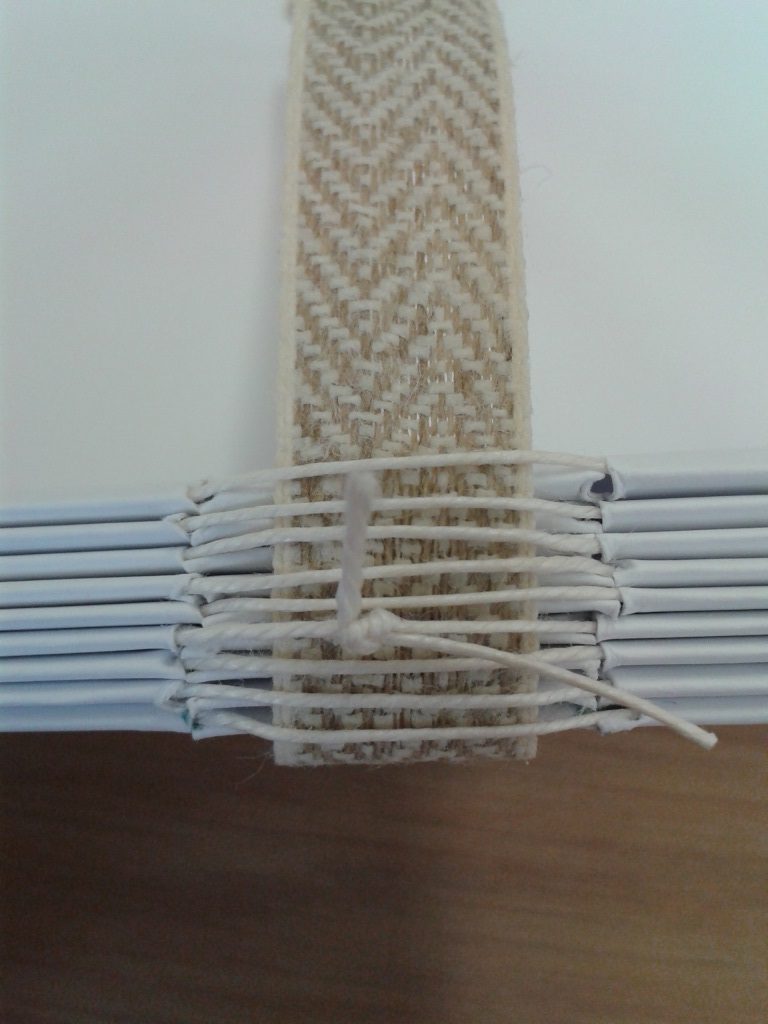
Week one was an explanation of paper making, week two was the use of Japanese paper for repairs and this week we covered sewing. Although the needle and thread were familiar… this was a little different from sewing I have done in the past! Although for new books the gatherings are joined together by machine, in days gone by prior to the mechanization of printing this would have been done by hand.

Although it took me a few tries to get the hang of it – by then end of the morning I had produced a simple book, made of several gatherings of paper. Sewing around pieces of tape gave the spine more strength.
With this experience I can go onto repair books here at special collections by sewing loose pages back in. I look forward to my next training session.