A warrior’s gender identity
A warrior’s gender identity
[Warfare, 7]
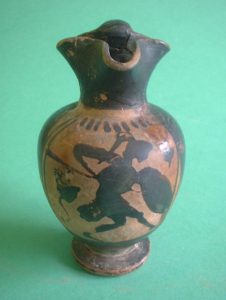
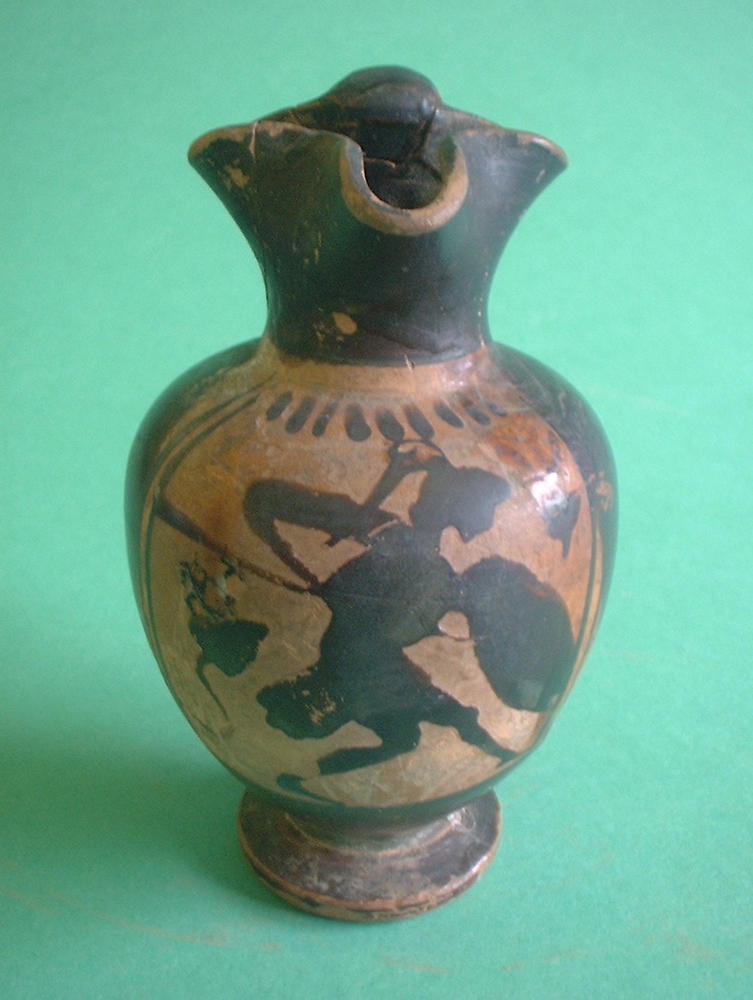
Some images of warriors, like the one decorating this wine jug, don’t give much away regarding the identity of the person pictured. The renowned Greek warrior Kaineus (he/his), was once a beautiful maiden named Kainis (she/her). After Poseidon had raped Kainis, he offered her anything she wished in return for the assault. Kainis wished to be a man to be better equipped to defend themselves. They also wished to become impenetrable to the sword, which may reflect their desire to not be penetrated sexually. Kainis embarked on many heroic endeavours such as the Kalydonian boar hunt as well as voyaging with Jason and the Argonauts. In Ovid’s Metamorphoses, Caeneus (their Roman name) is described with virtus, a Roman term used for masculine characteristics of courage and heroism. For Kainis to have been once assigned female at birth, yet regarded so highly among warriors, was exceptional. For Kainis to be renowned as a warrior of great virtue makes them a transgender hero of. They are transgender in the sense that they transitioned from their gender assigned to them at birth. While such a term did not exist in Greek antiquity, there are other transgender characters from ancient texts. In Lucian’s Dialogue of the Courtesans 5, for example, Megilla/Megillos appears to present as a self-identified trans man.