Biromanticism
Biromanticism
[Death in Antiquity, 19]
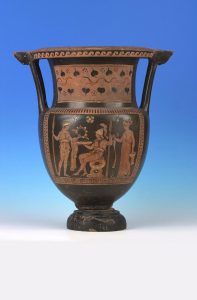
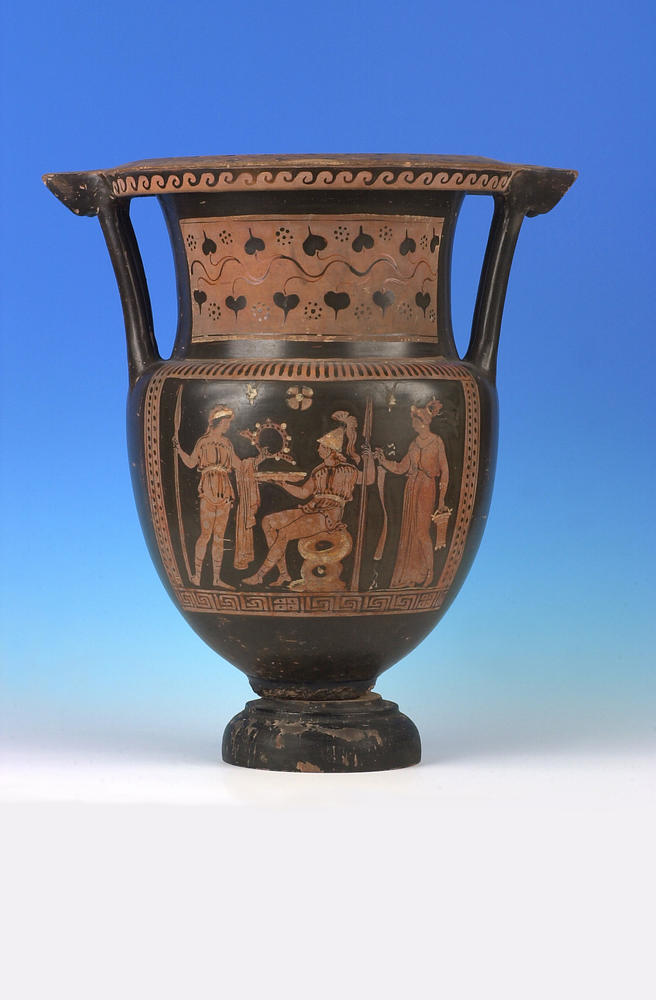
The scene of two young male warriors with a woman that decorates this krater reflects romantic customs common among Greek warriors. In Homer’s Iliad, Achilles takes a female slave Briseis as a war-prize, a signal of status and power as well as sexual attraction. Is the woman in this triad such a prize? Homer tells also of the deep friendship between Achilles and his comrade Patroklos, which can be understood as homoromanticism, being romantically attracted to someone of the same gender as oneself. If Achilles was attracted to Patroklos and Briseis could we suggest it is a case of biromanticism? Affection between comrades is often dismissed as mere companionship between men, which denies the possibility of romantic motivations, yet there are other ancient stories of affection between male warriors. In his play Orestes, for example, Euripides tells us of such a connection between Orestes and Pylades. Tragedy and death looms over these men at every turn, so the only way to endure their hardships is by being together with their partners. Pylades told Orestes, “Your ruin would mean mine too, since friends share everything.” No remaining sources attest sexual relationships between Achilles and Patroclus or Orestes and Pylades, but to read the texts and deny the admiration reaching deeper than camaraderie says more of the audience than the myth itself. Homoromanticism was certainly omnipresent in the ancient Mediterranean and it was customary for men to have wives and families as well as male lovers.