Medusa’s gaze
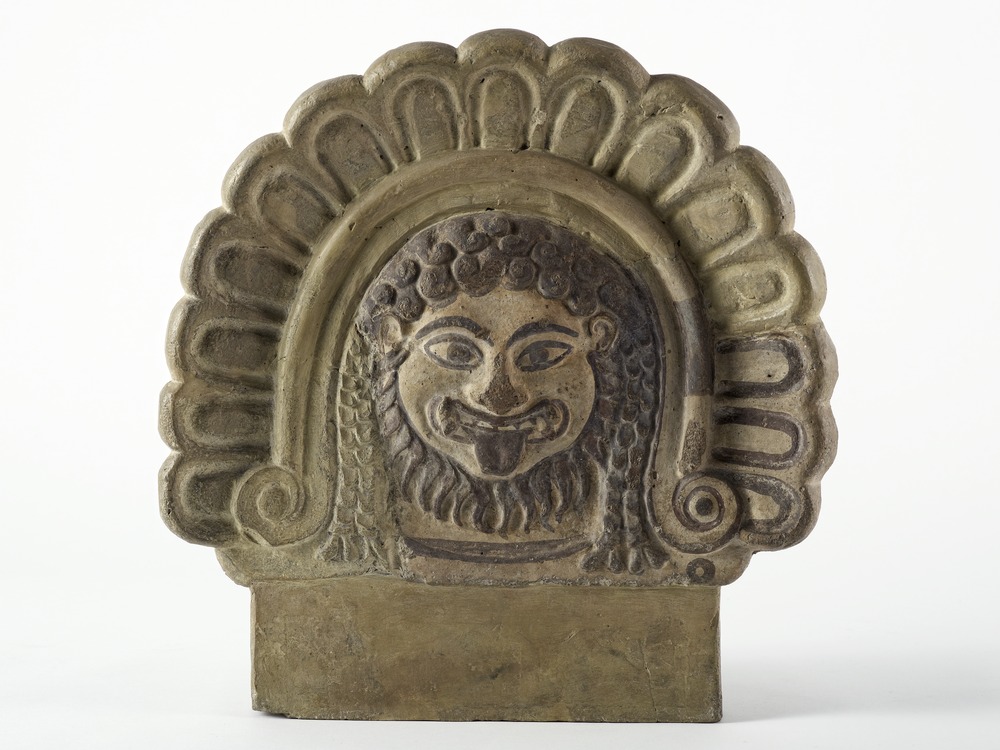
Antefix decorated with Medusa
[Myth & Religion 51]
An antefix can be used to cover the end tiles of a roof as decoration, as well as protecting the tiles themselves from environmental factors. The myth of the Gorgon Medusa, whose fearsome face decorates this antefix, has been famously retold in a variety of different forms, making the story of her stoney-glares and snake-hair one of the most prolific in Greek mythology. A rare version of her origin tells that Medusa was once a beautiful woman who found herself caught in the games of the Greek gods and was raped by the sea god Poseidon in the Temple of Athena. Rather than punishing Poseidon, Athena, the goddess of wisdom and much else, transformed Medusa into a monster for her sacrilege, setting her legend into motion. Owing to the victim-blaming nature of Medusa’s transformation, women and queer communities see themselves in Medusa: they choose to take back control of their own identities and sexualities because Medusa’s identity was stripped from her without her consent. The mythical image of Medusa is therefore a projection of the female gaze, in response to the male gaze. This female gaze steers away from male objectification of women and encourages women to reclaim themselves. In ancient Mediterranean societies desire between women was seen to deviate from the norm, posing a potential threat to the male position within the household. Among Lesbian and other communities, therefore, the image of Medusa now indicates ownership of the self, replacing fear and invisibility.