Basic Design: The Movement that Changed Art School Forever
-
Author
- Clare
-
Published Date
- August 21, 2026
Art Collection Volunteer Will Sibley explores the radical shift in art education which started with Basic Design
Have you ever heard of art students doing strange things? Wondered what was so fascinating about the path of a falling string or a pile of matches? Or even seen someone drawing just using their knee?
While no doubt odd, these exercises are about learning observation, intuition, and embracing serendipity. They may seem bizarre, but they come from an art movement that radically changed art education and shaped art schools into the institutions they are today.
Before the 1960s, art education was very traditional. The curriculum covered drawing fundamentals including anatomy, perspective, and drawing from memory. At the University of Reading, students in their first two years explored several disciplines before specialising. This might include sculpture, printmaking, wood engraving, lithography (printmaking using stone or metal), painting, and drawing. They were also required to take exams in subjects such as Art History and Philosophy of Aesthetics.
However, by 1959, there was a feeling that change to art education was imminent. In Reading, this shift coincided with Claude Rogers taking over as Director of Fine Art. Rogers came from teaching at the Camberwell School of Art (UAL) and the Slade in London. He brought with him several new staff members and the desire to elevate Reading’s status to that of a “London Art School”. The culture of art education was shifting nationally, and Claude Rogers was keen to keep Reading ahead of the change.
In 1960 the Coldstream Report, published by the Coldstream Committee, attempted to improve and standardise University Art Education. A degree in Fine Art was still relatively new – the University of Reading was the first to introduce it in 1937. Under the recommendation of the Coldstream Committee, in 1964 the Diploma in Art and Design (DipAD) was introduced.
The DipAD was a 3-year programme equivalent to the current BA in Fine Art. However, students had to be 18, have 5 GCEs (now known as GCSEs) and have completed a 1-year pre-diploma course to bridge the gap between their secondary and university education. The DipAD was designed as 3-years so that it fit nicely after a 1-year pre-diploma (a pre-DipAD).
The main criticism of the Coldstream Report was that it was confusing, which is a little justified! It also advised Universities to implement these new courses without describing how they should be taught. Nor did they have a central body to externally examine graduate work, which led to each University creating their own system. What did come out of the Coldstream Report was the realisation of the huge conflict between traditionalism and progressivism in art education.
Traditional art teaching wanted to keep education how it had always been – perspective, anatomy, and drawing from memory. Progressive art education was interested in keeping art teaching relevant to the changing art world, and it was changing fast! The 1960s saw huge developments in the art world beyond art schools. New mediums were appearing with the growth of performance and land art, and new technology allowed for an increase in video and computer art. Each lecturer seemed to have their own opinions on what – and how – art should be taught. The moment of change was here.
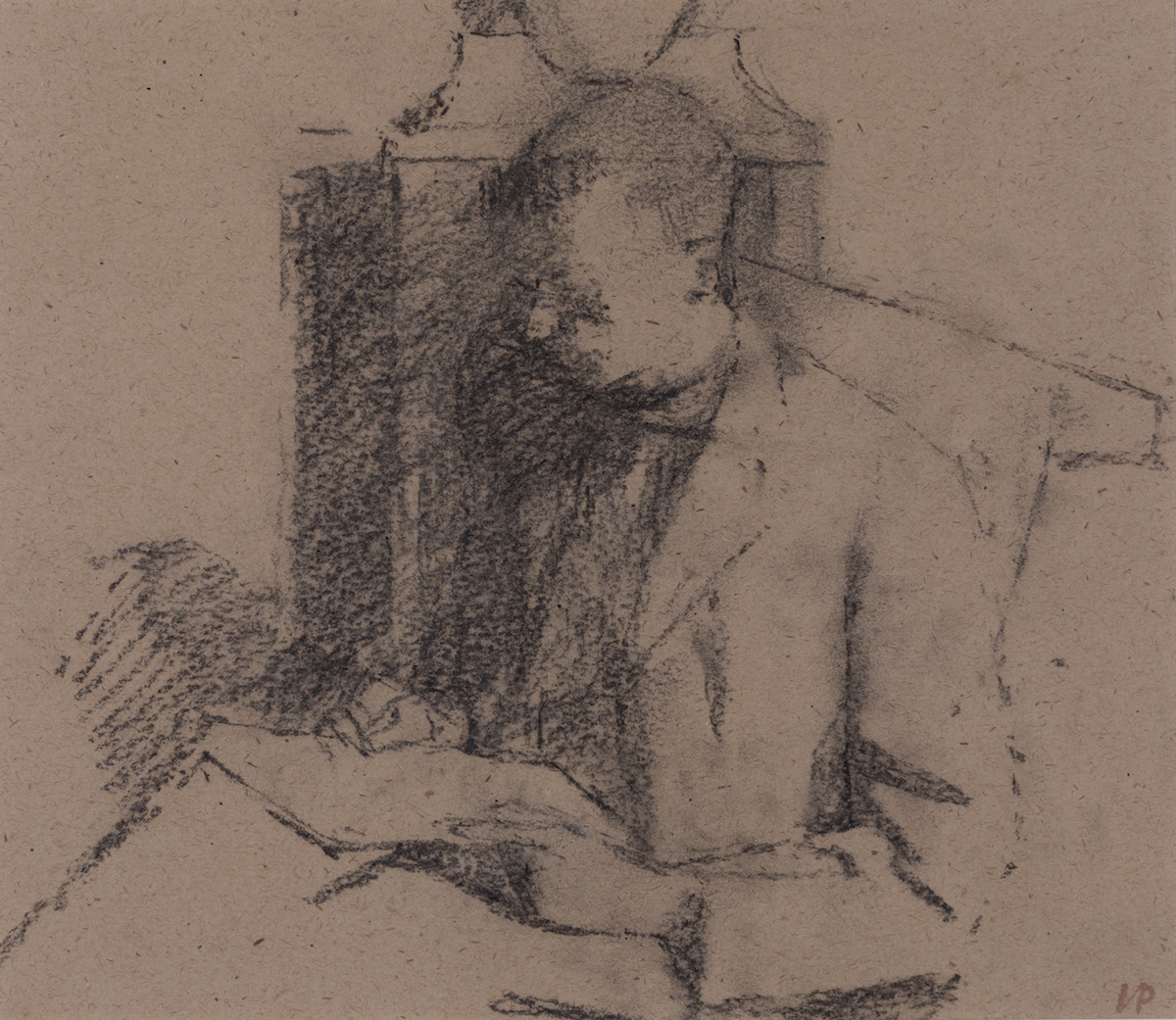
A key figure of this period was artist and lecturer Victor Pasmore. Pasmore was an advocate for a new art movement in the 1960s called Basic Design. This movement was about reason, logic, manipulating materials, and experimentation. It came from the German Bauhaus movement and had huge influence on British drawing, printmaking, and sculpture in the mid 20th-century.
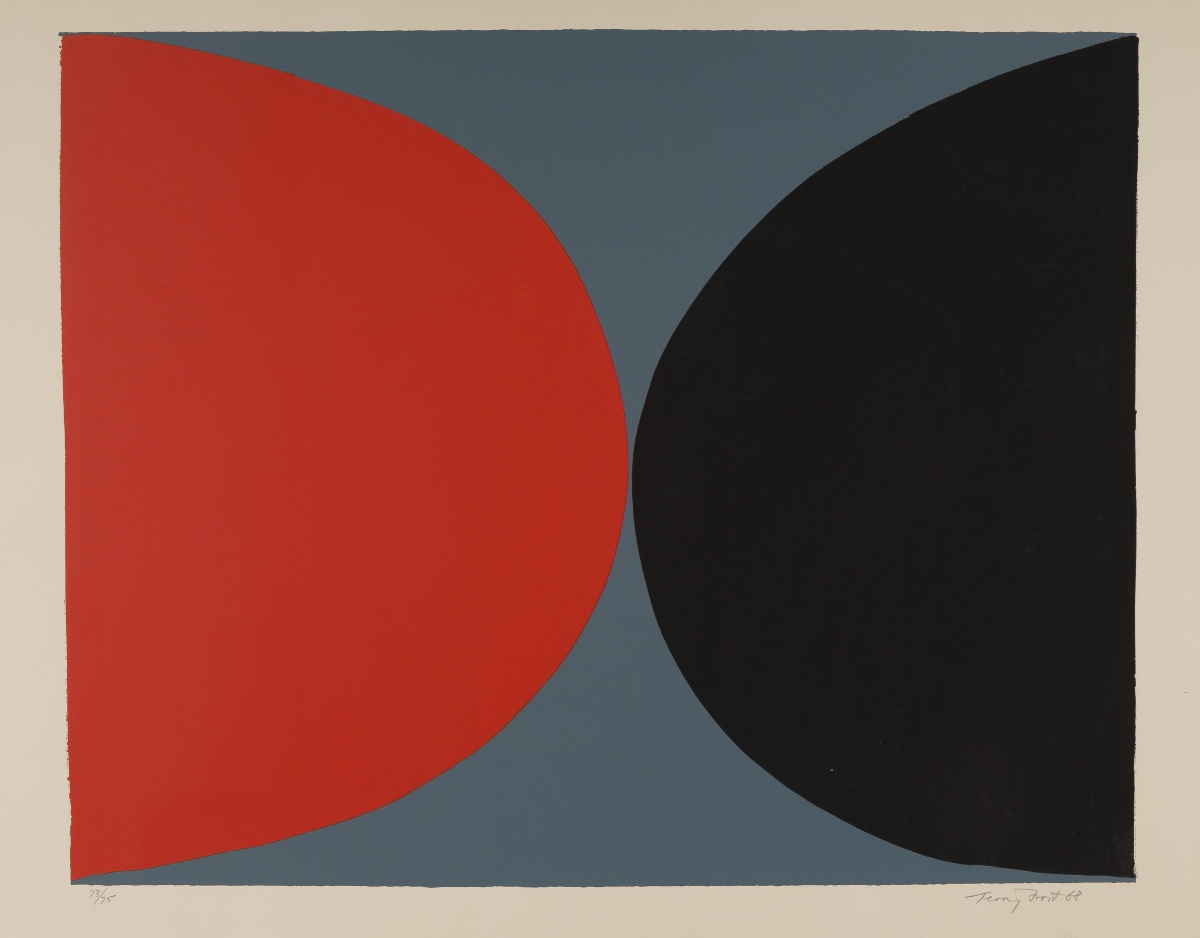
William Johnstone, at University Arts London (UAL), started teaching Basic Design in Britain. Victor Pasmore ran with his ideas and took them to Leeds College of Art, where he worked with colleagues including Terry Frost. Frost was a lecturer at the University of Reading from the early 1960s and was hugely influential to its culture. His work was exhibited onsite in an acclaimed solo show in the University Art Gallery in 1986 on the Whiteknights Campus and several pieces remain in the Art Collection.
Frost’s influence meant that the University of Reading was one of the many sites where Basic Design became a huge experiment in art education. From 1963, the students now studied Basic Design for their first year, spending time doing experimental art exercises. The exercises enabled students to develop intuition with form and material. Instead of simply learning to recall taught forms from memory, students were now instructed to observe the natural world and learn about movement, gesture, and composition in real time.
Another benefit of Basic Design was that it worked as a diagnostic tool, giving students the space to be experimental without the concern of specialising. At the University of Reading, Fine Art split away from History of Art and became its own course in the mid-1960s. Importantly, exams were also ditched at this time in favour of marking students on a body of work and their final exhibition. Sound familiar? These changes began to create the art education we know today all thanks to Basic Design.
In 1966, the Coldstream Committee published an addendum to the Report, specifying that pre-diploma courses should now be known as “Foundation Courses” to better clarify how they should function. These Foundation Courses are effectively the Foundation Diplomas we still have today.
Of course, the more traditional staff protested the changes, fearing that they were too extreme in their disregard for art fundamentals. One former-lecturer recalled confronting Martin Froy (the Director of Fine Art from 1972) at his dismissal of the importance of drawing as a taught skill, to which Froy apparently replied, “there is no such thing as drawing”. But, despite concerns, Basic Design prevailed.
Rita Donagh, who experienced the teaching of Basic Design at Newcastle-Upon-Tyne, brought its ideas to Reading when she became a lecturer at the University in 1964. Her best-known project Three Weeks in May,1970 was hugely influential on the students and culture in Reading. This project was co-created by Donagh and a group of students, who recalled hearing the news that four American students had been shot at Kent State University in Ohio by the National Guard. Donagh and her students decided directly respond to the news. The abstract painting Reflection on Three Weeks in May 1971 that they created remains in the Tate collection. An exhibition of student work in the University Art Gallery in 1982 includes references to this seminal moment, with the students noting the influence of Basic Design teaching on their art education years later.
In 1970, a new report was published by the National Advisory Council of Art Education (NACAE) and the National Council for Diplomas in Art and Design (NCDAD) on Foundation Courses. It criticised the Coldstream Committee for its confusion. But, ultimately decided that Foundation Courses were invaluable to students as a bridge into the degree courses. The compromise they suggested was that Foundations should be standardised by central guidance from the NCDAD.
Foundation Diplomas are still valuable today for this same reason – they give students the space to experiment with materials and ideas before they choose which degree course or specialism to pursue.
Foundations today are mainly funded by the government. A report from the last few years investigated if the courses were beneficial. It concluded they were, and worth the funding granted to them. An idea born out of the turbulent 1960s art world, and still in practice 60 years later for good reason!
So, what happened to Basic Design? The experimental processes are still a fundamental part of art education, teaching students to learn through making. Basic Design had a big impact on the work made by staff and students at the University of Reading. It appeared throughout student and staff exhibitions held in the University Art Gallery in the 1980s.
Basic Design allowed students to discover the whole world; as Terry Frost said to students in the 1960s as a lecturer, “The big canvas can be your liberation to discovery or your cage for a limited idea. At any rate, it will be a test of your intent, your attitude, your ability and your guts. Which follows that you will at least find out something about yourself.”
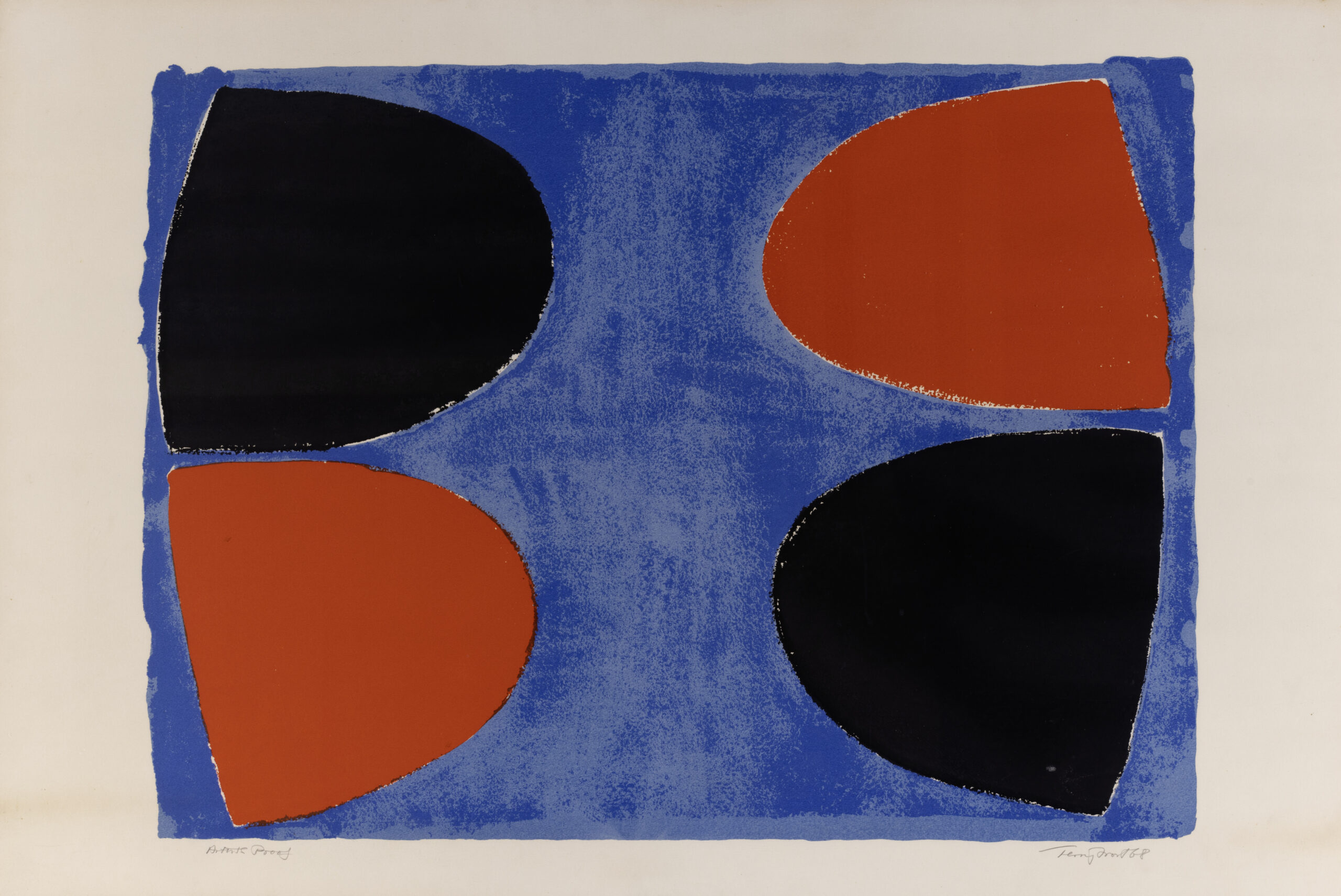
Works by Terry Frost, Martin Froy, and Victor Pasmore are still part of the University of Reading Art Collection and can be seen on display around the University or in the Art Study Room.