
Imprint
Women Artists and the Reading School of Art
Women played a vital role in the University of Reading’s early School of Art. This display brings fresh attention to women students who made prints. It explores both their artistic processes and varied careers.
From the 1890s, exciting developments in printmaking emerged from artist-teachers in the School. Their students adopted pioneering and often avant-garde technique. Frank Morley Fletcher (1866-1949) and Allen Seaby (1867-1953) played a key role in introducing wood block printing in the Japanese style. In the 1930s, Robert Gibbings (1889-1958) even established a small university press. Displayed in this online exhibition is a portfolio of prints by Seaby’s students, produced at the University.
This display forms part of University of Reading Centenary celebrations.
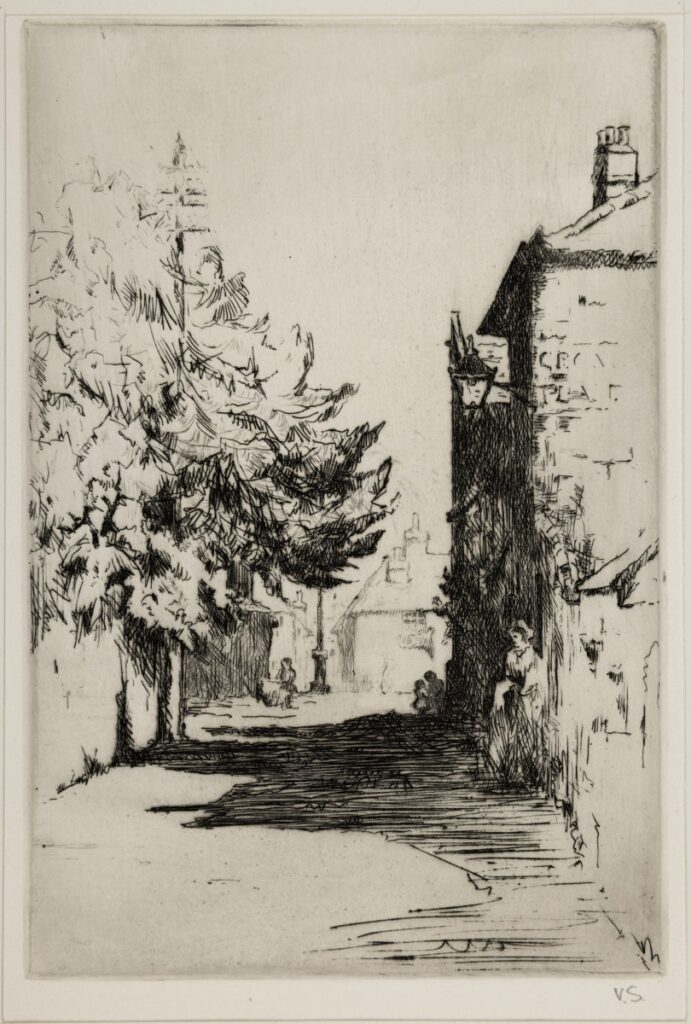
Crown Place, Reading
This etching depicts Crown Place near the London Road campus of University College Reading. In the background, somebody is sketching, reflecting the School of Art’s emphasis on drawing from nature.
Born in Madras, India, Sinclair moved to Newbury in Berkshire after her father’s bank failed. She won an Open Scholarship and like most students from this period, she trained to teach art. She became Art Mistress at St Hilda’s School in Exeter. She married Stanley Cox, who later became head of Newbury School of Art. She appears to have continued making art, though no later works are known.
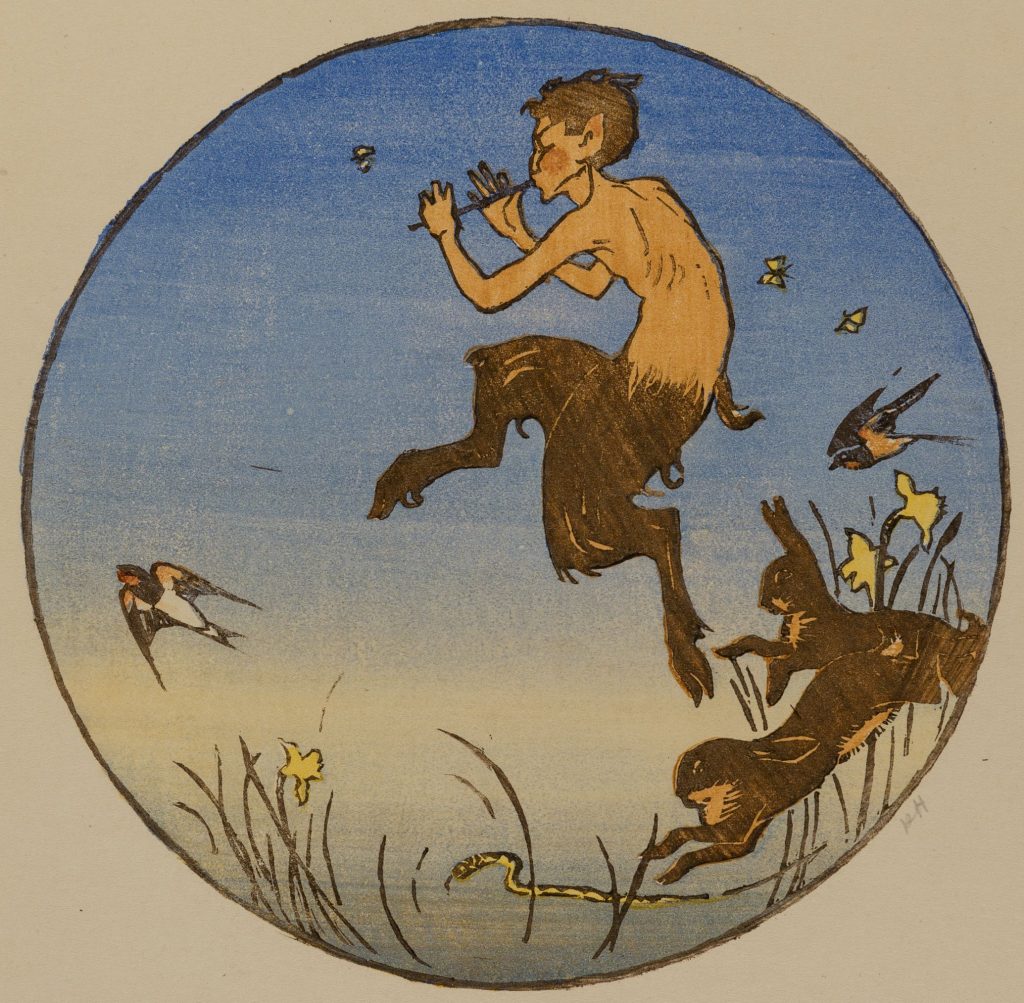
The Fawn
Raised by a single mother in Manchester, Kathleen Hale was considered ‘unteachable’. However, she won a scholarship to University College Reading. She lived in St Andrews Hall when she was a student but struggled with strict rules and lack of funds. She was almost expelled for selling her hair.
Despite this Hale was inspired by her art classes and her tutor, Allen Seaby. Her autobiography states: “[He was] a wry man, brittle with rheumatism, but as cheerful and alert as a bird … I worked extremely hard and indeed was only turned out of the studio late in the evenings when it was time for the caretaker to lock up.”

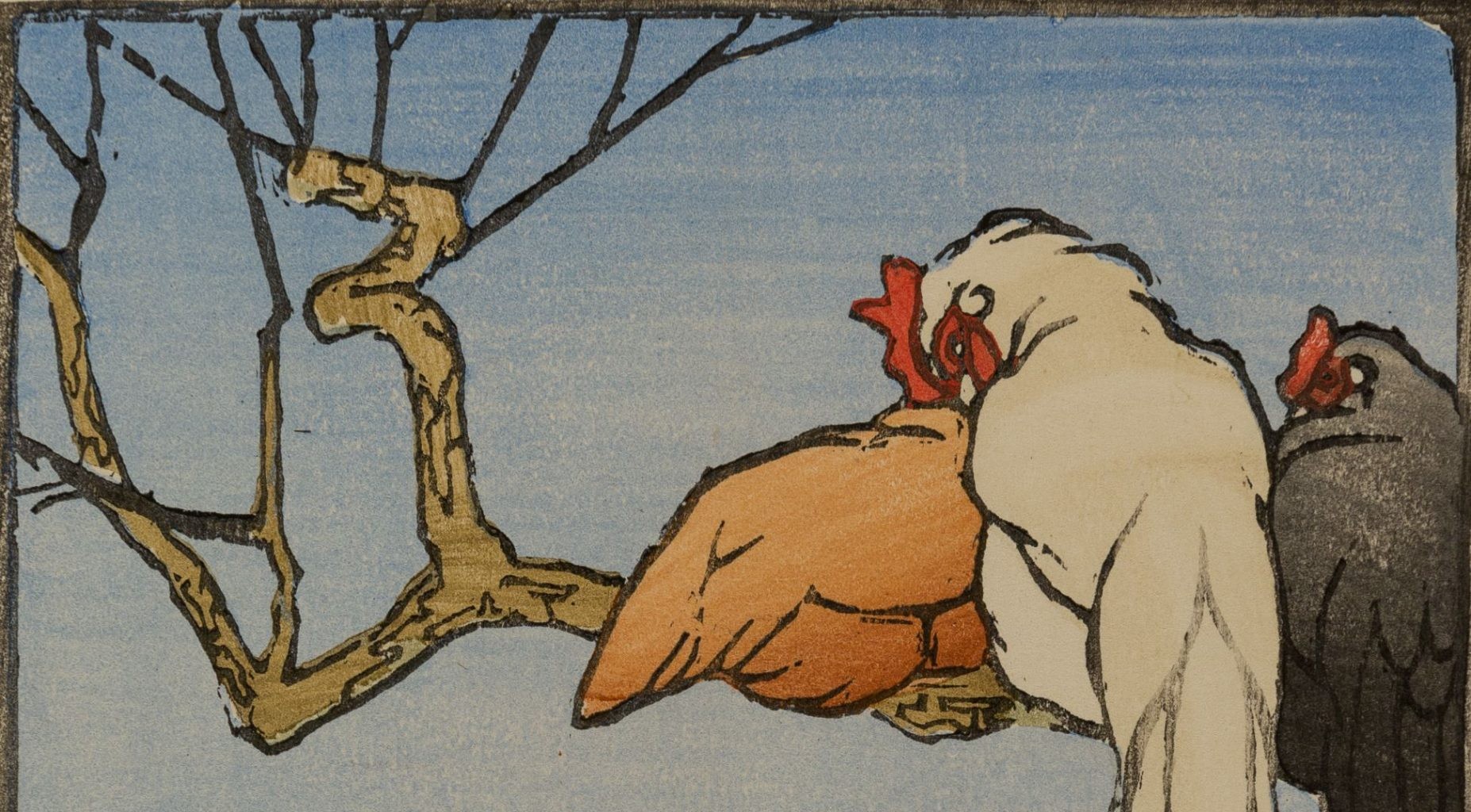
Fowls
Hale was offered an additional year of study but she wanted freedom. She sold her bicycle to pay for a one-way ticket to London. During the 1920s, she supported herself as a struggling artist by working for famous artists including Augustus John, Vanessa Bell and Duncan Grant.
Hale wanted to have a family so she married. It was while juggling motherhood that she found creative recognition. In 1937, she created Orlando the Marmalade Cat, whose books set new standards for quality in illustrated children’s publishing. Each book ‘took four to five months of working seven hours a day, seven days a week.’
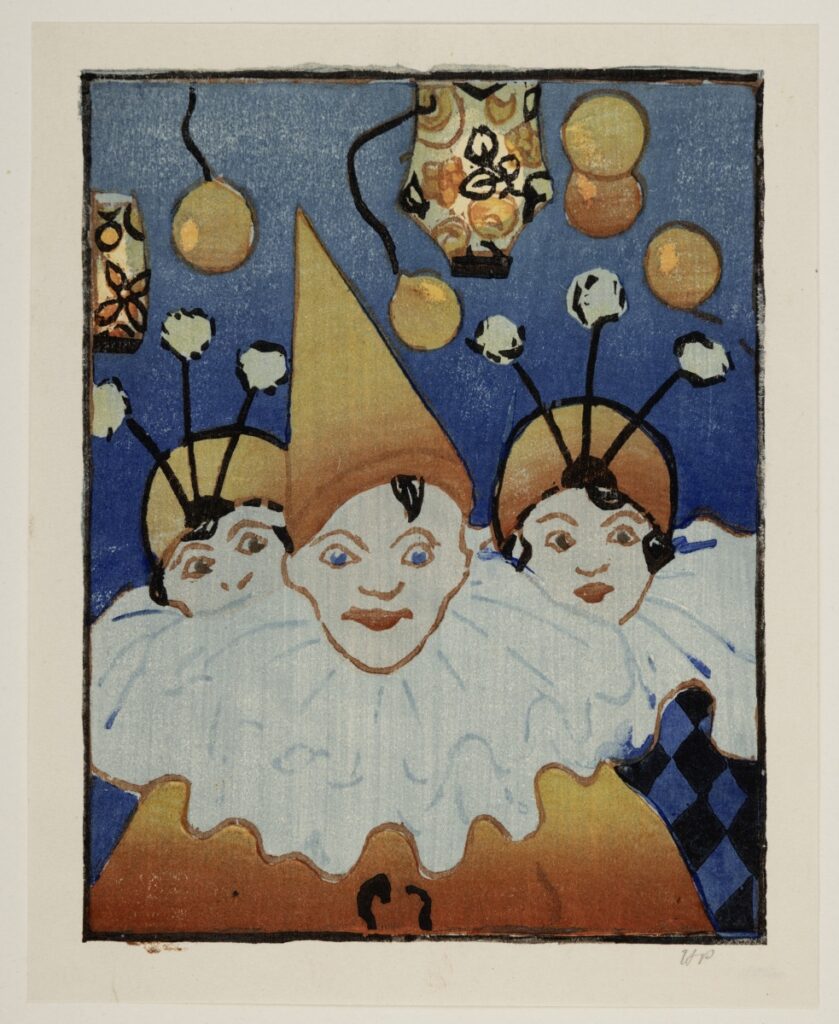
The Revellers
With some of these student artists, very little is known about their later lives. Newspaper reports from early 1920s identify Pritchard as secretary of a Reading branch of the ‘Faculty of Arts’. This national initiative aimed to create a co-ordinated federation of artists. She seems to have managed the branch from her home in Caversham.
In this print, Pritchard uses bold, decorative style with strong outlines, giving the print a theatrical appearance. Layers of translucent colour, especially within the lanterns, creates a sense of atmosphere and adds to the lively, animated feel of the scene.
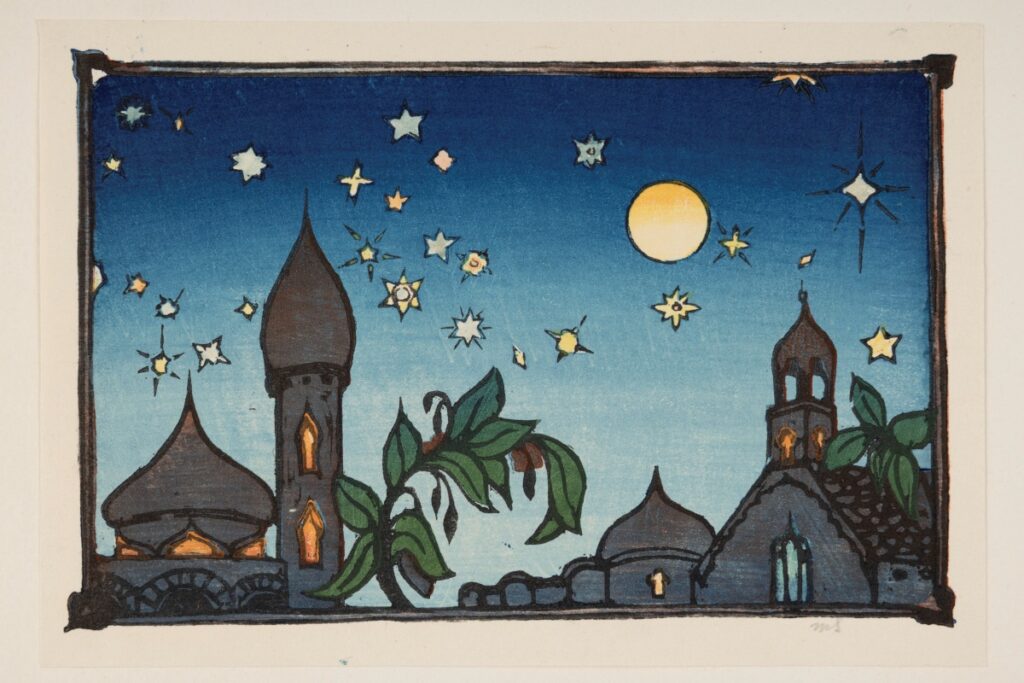
Stars of the East
Mary May Sheldon was the daughter of a clerk at Huntley and Palmers. She was privately educated before studying art at University College Reading. Like many of her peers, she went onto become an artist teacher. May ran schools in Tenby and Kew while continuing to exhibit her art.
In the 1930s, she established St Nicholas School on Belle Avenue in Reading. She also held exhibitions of her art there. Contemporary newspapers report ‘many of her beautiful woodcuts are shown all over the world’. So far, we have been unable to locate where these prints were exhibited.
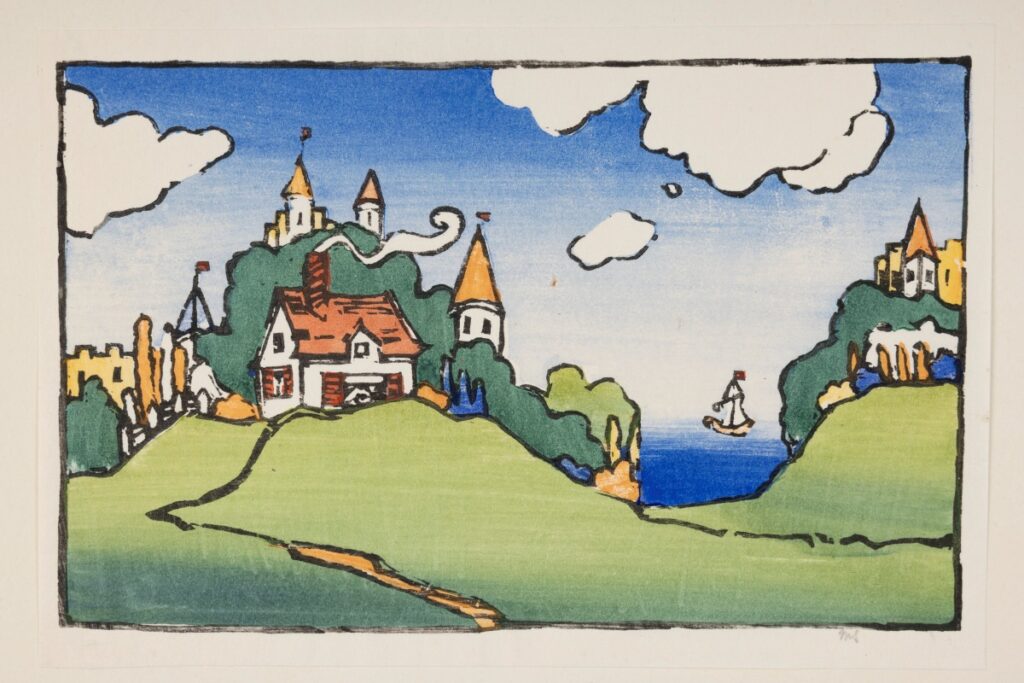
Theatrical Scene
At the urging of Seaby and a local headmistress, Sheldon became a member of the Reading Guild of Artists. She was still exhibiting and selling her work in the 1980s. Our collection includes one of her later artworks. Others may survive in local collections.
The title of this work suggests it may has originated as a design for a stage backdrop. May’s sister, Dorothie, taught drama and ran a local theatre company. Together, the sisters staged plays for charity. Dorothie was assisted by Helen May, student and biographer of the famous ballet dancer, Anna Pavlova.
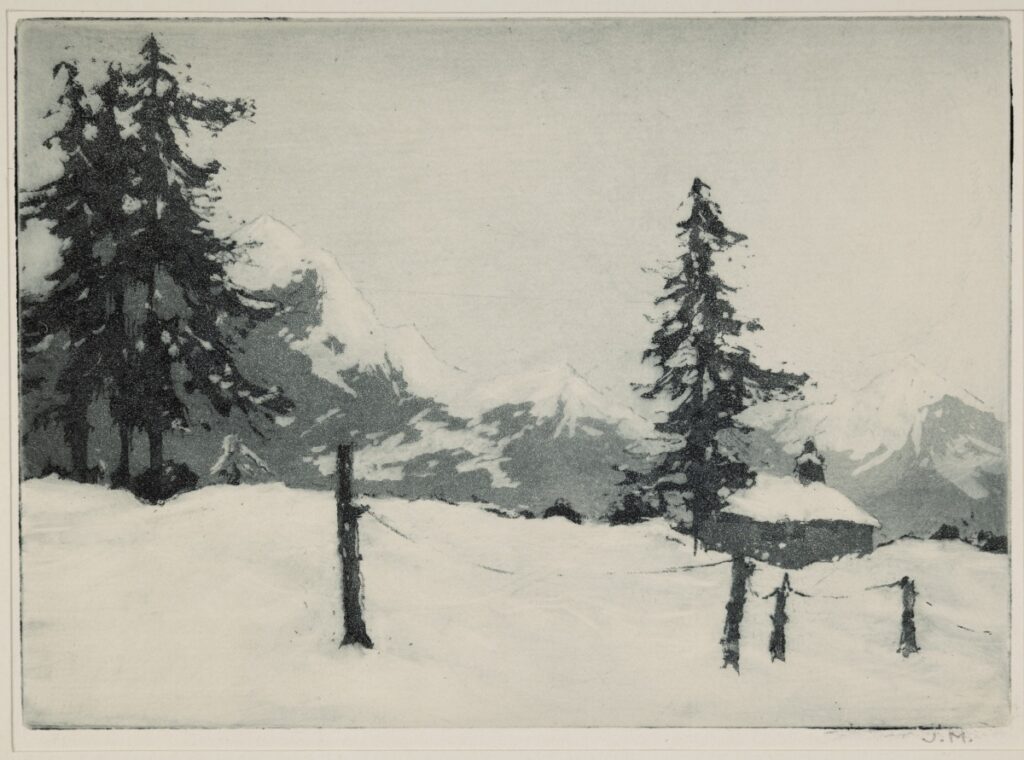
Snow Scene
Joan Murrell came from a medical family who lived at Blenheim Lodge on London Road. Her father was a local physician and surgeon. We know little of her later artistic career except that in 1955, a Cornish newspaper notes that she was exhibiting with the East Cornwall Society of Artists.
In this print, Murrell has used the aquatint printmaking technique to create soft, tonal effects. This method beautifully captures the delicate texture of snow covering the mountain side, subtle shadows, and the subdued winter sky.
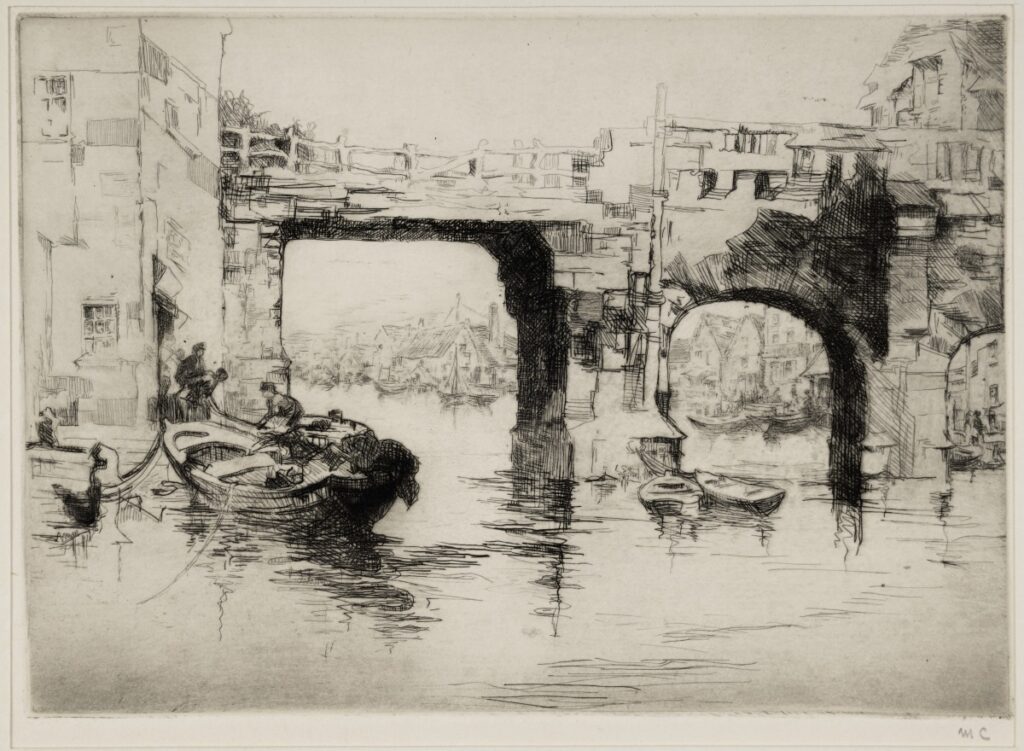
The Bridge
Mary Gertrude Cowland was born in Sussex, the daughter of an underwriter at Lloyds. She received a one year scholarship and completed a two-year diploma at University College Reading. While she was here she won the prestigious Willink Prize.
Many of her artworks appear in the student paper, Tamesis, often signed ‘MGC’. After graduating she returned to Sussex and continued studying at Hastings School of Art.
This etching demonstrates Cowland’s skill and confidence. The depiction of the bridge evokes the celebrated etchings of artists like James McNeill Whistler.
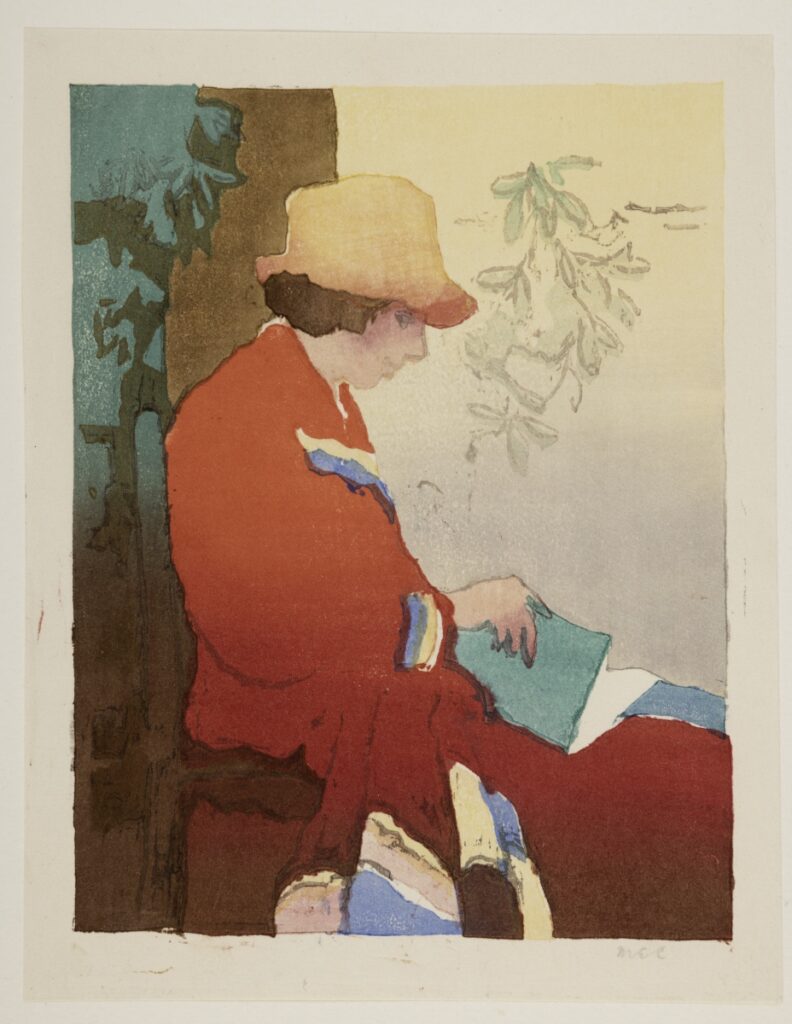
The Reader
We think this is a self-portrait of Cowland as a student. After graduation, she travelled through New Zealand, making sketches.
In the 1920s she joined the Colour Woodcut Society and exhibited Periwinkles at the Royal Academy of Arts in 1926. That same year, her work was also shown in an international exhibition at the Moscow Museum of Fine Arts. Other artists featured were Robert Gibbings and Paul Nash.
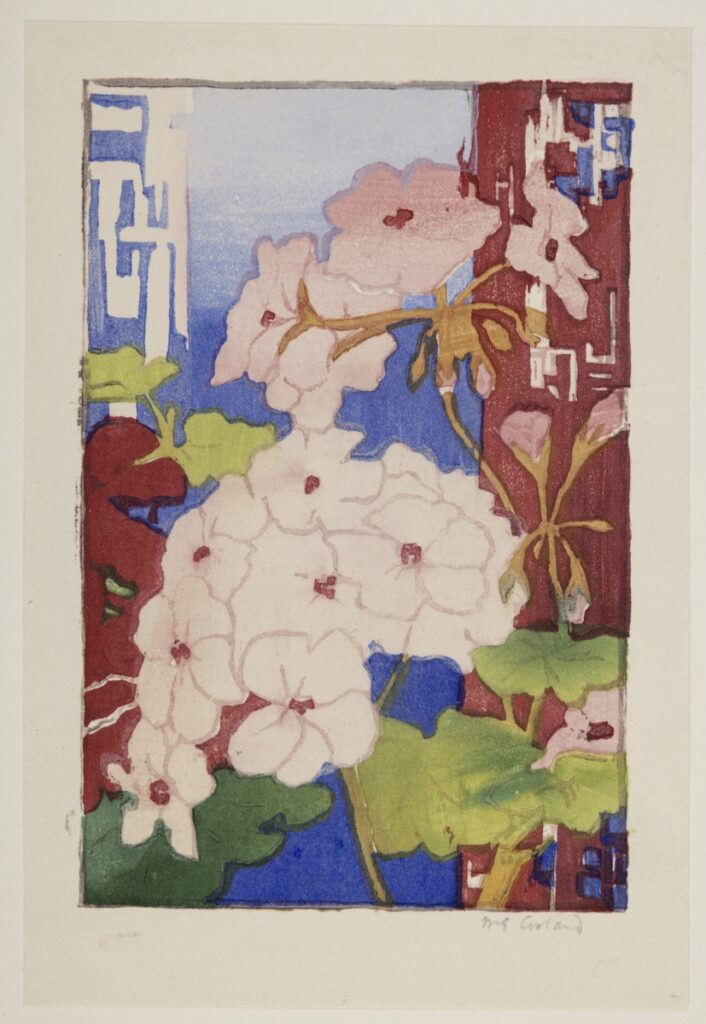
Primulas
Nature and flowers were frequent subjects of Japanese wood-block prints, known as ukiyo-e. In Japanese culture, individual flowers carry symbolic meaning and often represent the changing seaons. Cowland was likely inspired by the aesthetics of ukiyo-e when creating this delicate and elegant print.
In 1937, Cowland married Bill Chambers and started a family at a Sussex farm. Like many of the artists featured here, she continued making art. She also established the Norland Arts Group, which still runs today.