Festivals of the Imagination: early editions of novels and poetry by James Joyce
On James Joyce's 144th birthday, Fiona Melhuish, Librarian (Museums and Collections), introduces some of the early editions of Joyce’s publications that feature in our current exhibition, ‘James Joyce: Enigmas & Puzzles’.
-
Author
- fionamelhuish
-
Published Date
- February 2, 2026
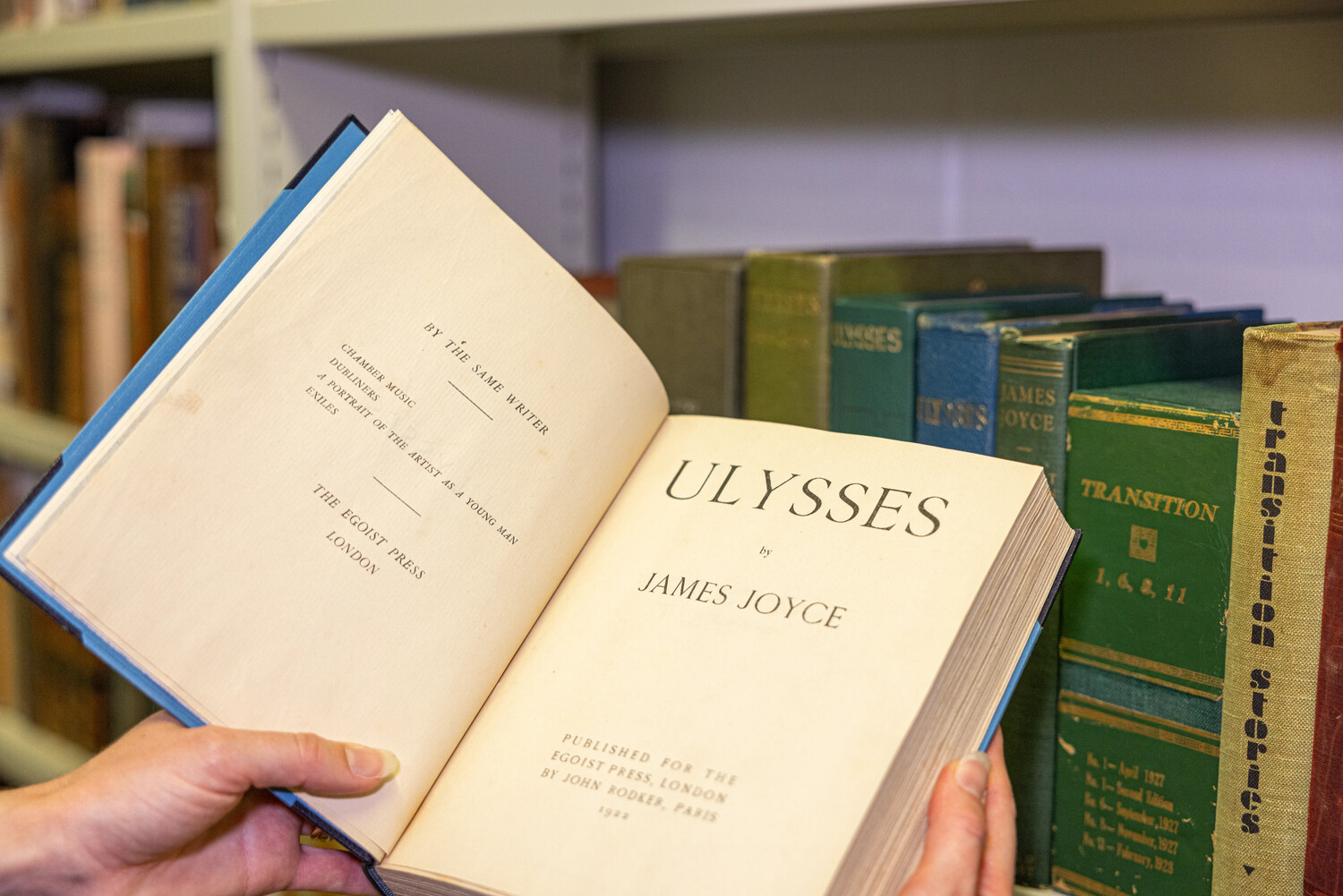
In 2020, Stephen James Joyce, Joyce’s grandson, bequeathed the Solange and Stephen James Joyce Collection to the University of Reading Special Collections. This major collection features books, documents and artefacts relating to James Joyce, one of the most original and influential literary figures of the 20th century.
The book collection contains rare copies of first and limited editions of Joyce’s works published during his lifetime and posthumously, a wide range of translations of Joyce’s works into most European languages and lesser-known languages from across the world, critical scholarly publications as well as popular biographies of Joyce.
Our first exhibition of material from the collection, ‘James Joyce: A love of language’ in 2023 showcased published translations of Joyce’s work to explore his fascination with languages and his interest and involvement in the translations of his works.
In our current exhibition ‘James Joyce: Enigmas & Puzzles’, items from the Joyce book collection play a more supporting role as we focus on highlights from the archive collection, but we have included a few early editions to accompany relevant manuscripts on display.
Ecce Puer
To accompany the original manuscript of Joyce’s poem ‘Ecce Puer’ from the Joyce collection, we have on display the first edition of the ‘Collected Poems of James Joyce’, published in New York by The Black Sun Press in 1936 (JOYCE RESERVE—22). This was the first time the poem had been included in a publication. This copy from the Joyce collection features some handwritten corrections to the poem added by Stephen Joyce.
The poem, whose title translates as ‘Behold the Young Boy’, was written by Joyce on the day that Stephen was born on 15 February 1932, and both celebrates the birth of his grandson and mourns the death of his father the previous December, with Joyce seeing an affinity between the two events, which seem to counterbalance one another. Joyce also expresses his guilt at his failure to return to Ireland when his father was dying with a plea for forgiveness.
This poem relates closely to one of the display’s themes of family, and is particularly interesting and poignant for the seriousness of its mood and tone. In so much of Joyce’s writing there is an emphasis on word play, puns and humour. In fact, Joyce himself said of his novel ‘Ulysses’ in an interview in 1922 that, “The pity is … the public will demand and find a moral in my book—or worse they may take it in some more serious way, and on the honour of a gentleman, there is not one single serious line in it …” However, in this little poem, Joyce is being very serious – it is a poem about his family and his feelings for people who were very important to him, and it is a very personal and moving expression of those feelings.
The sentiments behind ‘Ecce Puer’ resonated with Joyce’s friend, Samuel Beckett. In his biography of Beckett, James Knowlson recalls Beckett at the end of his life reciting the last line of the poem to him – ‘O, father forsaken, / Forgive your son!’ – suggesting that the line held a strong significance for Beckett who also suffered from intense guilt and remorse after the death of his own father, feeling that he had not lived up to his father’s expectations.
Finnegans Wake
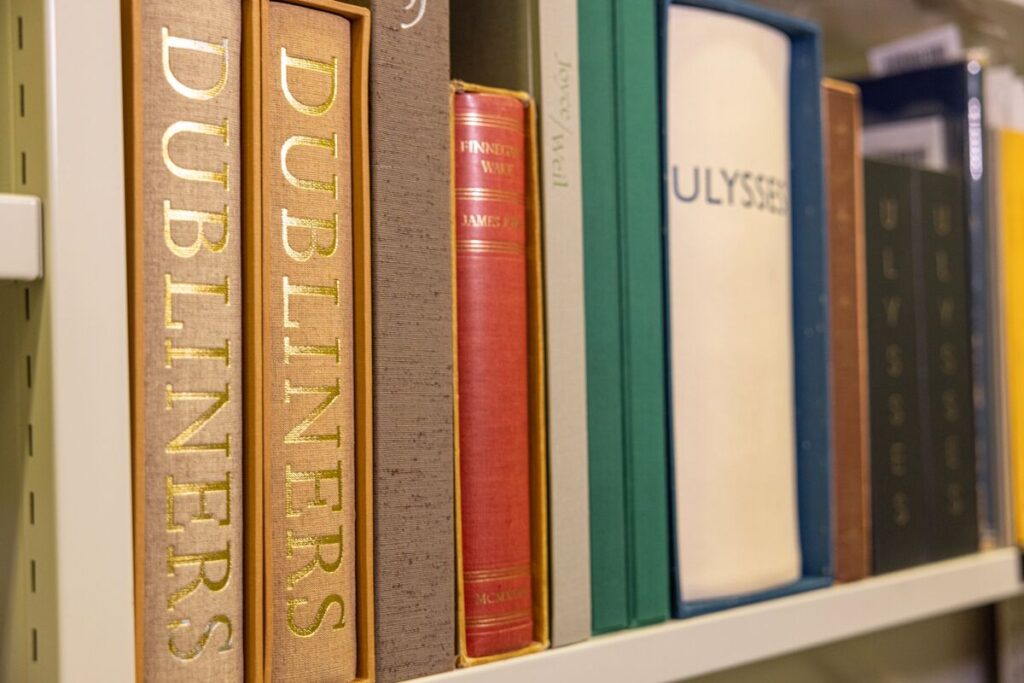
Also on display, alongside original manuscripts for ‘Finnegans Wake’ is a copy of the signed first edition of the novel, published in 1939 in London by Faber and Faber. This copy is no. 403 of 425 copies of a limited edition signed by the author in green ink (JOYCE RESERVE FOLIO–30-FIN).
Chamber Music
One of the archival treasures in the exhibition is Joyce’s handwritten copy of ‘Chamber Music’, an anthology of poems and his first publication, that he created for his partner and later wife, Nora. Sadly we do not have a copy of the first edition published by Elkin Mathews in London in 1907, although we hope to acquire a copy in the future. However, we do have a copy of the first pirated American edition published in Boston by The Cornhill Company in 1918 (JOYCE RESERVE–30-CHA) which is featured in our display.
Ulysses
In a review in ‘The New York Times’ in 1922, Joseph Collins wrote that, “‘Ulysses’ is the most important contribution that has been made to fictional literature in the twentieth century,” and it is regarded by many critics as the greatest example of modernism in literature. Joyce’s masterpiece is centred around a single day in the life of an ordinary Dubliner, Leopold Bloom, and is famous for its use of a startlingly original and often baffling ‘stream of consciousness’ writing style. When the novel was first published some readers were shocked by its sexual content and daring humour, and it was banned in the United States, the United Kingdom and elsewhere for a decade after it’s first publication. However, the importance of ‘Ulysses’ was soon recognised, and it was widely discussed by literary critics, although with a mixture of responses. Joyce’s preoccupation with language in ‘Ulysses’ attracted a great deal of comment, and led the critic Cyril Connolly to remark that it “should be judged perhaps as a poem, a festival of the imagination”. When overturning the ban on its publication, an American judge described the novel as “a sincere and serious attempt to devise a new literary method for the observation and description of mankind.”
The publication history of ‘Ulysses’ is fraught with legal battles over censorship and copyright. There is also the challenge of editing the text. There have been at least 18 editions of the novel, and variations in each edition. The Joyce scholar Jack Dalton, claims that the first edition of ‘Ulysses’ contained over 2,000 errors. Later editions attempted to correct these mistakes, but the challenge of separating accidental printing and other errors from Joyce’s intentional tricks and ‘errors’ to challenge the reader, meant that further mistakes were added.
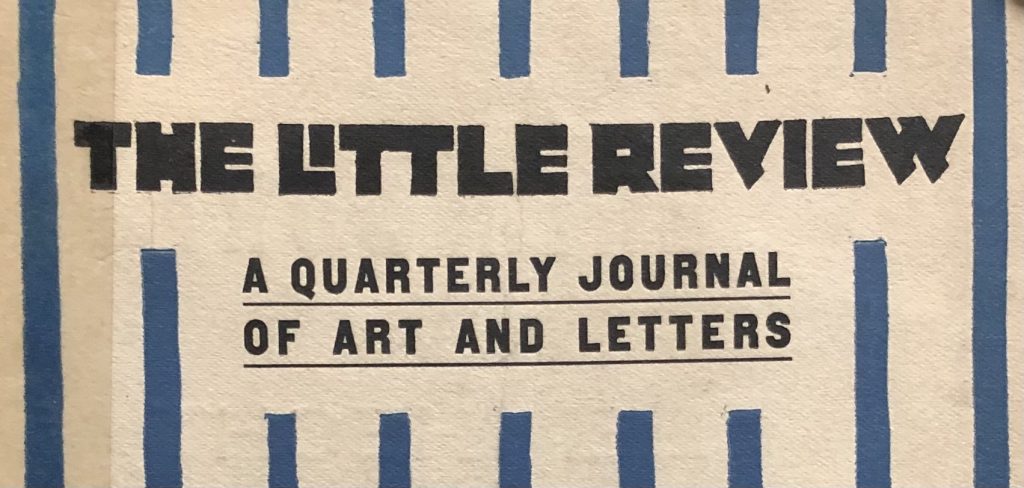
In February 2022, we marked our announcement of the acquisition of the Joyce collection and the centenary of the publication of ‘Ulysses’ in book form by publishing a blog post by Hollie Piff, our erstwhile Graduate Trainee Library Assistant. This post charted the eventful journey of ‘Ulysses’ from serialised publication in ‘The Little Review’ in 1918 to the first book edition published by Sylvia Beach of Shakespeare and Company in 1922. Our current exhibition features a copy of this 1922 first edition (JOYCE RESERVE–30-ULY), with its distinctive blue cover. The collection includes many different editions of ‘Ulysses’, including a number of translations, and we have selected some of the other key early editions for this display.
These include the first authorized American edition (JOYCE RESERVE–30-ULY), published in New York by Random House in 1934, with a stylish 1930s cover designed by Ernst Reichl. This was the first edition published in America after the novel was effectively banned in 1921 and after the court decision in the United States in 1934 which ruled that the book was not obscene and that it could be published without the threat of prosecution. In the United Kingdom the novel was banned until 1936. ‘Ulysses’ was never banned in Ireland, although it was not allowed into the country due to a customs loophole, and it was not openly available in Ireland until the 1960s.
Alongside the American edition, we have a copy of a new revised edition of the first French edition published in Paris by Gallimard in 1930 (JOYCE RESERVE–30-ULY/FRE). This “Nouvelle édition” of ‘Ulysses’ is an important early French revision of Joyce’s masterpiece, featuring the critical, collaborative translation by Auguste Morel, Stuart Gilbert, Valery Larbaud, and the author. The first French edition, which was featured in our previous Joyce exhibition, was published in Paris by Adrienne Monnier at Maison des amis des livres, 7 Rue de l’Odeon, in 1929.
Also on display is a copy of the first English edition printed in England by John Lane at The Bodley Head in 1936. This elegantly designed and finely printed edition with its olive green cloth cover features a cover design by the typographer and book designer Eric Gill, with a reference to Odysseus’s bow in gilt. This edition also contains the first Joyce bibliography and appendices concerning the court case. The Bodley Head had to set up its own printing company in order to print the novel as their usual printer refused.
We also have on display a copy of ‘Ulysses’ published in New York by The Limited Editions Club in 1935, with signed illustrations by the French artist Henri Matisse (JOYCE RESERVE FOLIO–30-ULY). Curiously, Matisse’s drawings illustrate scenes from Homer’s ‘Odyssey’ rather than from ‘Ulysses’, suggesting that he never actually read the book he was supposed to be illustrating. It is thought that he gave up trying to read the novel, and a friend loaned him a study of ‘Ulysses’ by Stuart Gilbert, which emphasized the work’s references to classical literature.
This edition of ‘Ulysses’ consists of 1,500 copies made for the members of the Limited Editions Club. This copy is number 417 and is signed by Matisse but not by Joyce. There was a rumour that Joyce was so furious about Matisse’s Homeric illustrations that he refused to sign any more copies, making the copies signed by both artist and author very rare. However, it is likely that the story is another ‘Joycean myth’ as Joyce had agreed to sign only 250 copies, perhaps due to his poor eyesight. As Edna O’Brien mentioned in an article about Joyce in ‘The New Yorker’ in May 1999, Joyce loved to create and encourage legends and rumours about himself – “he swam in the Seine every day, he wore black gloves in bed, he surrounded himself with mirrors … ”.
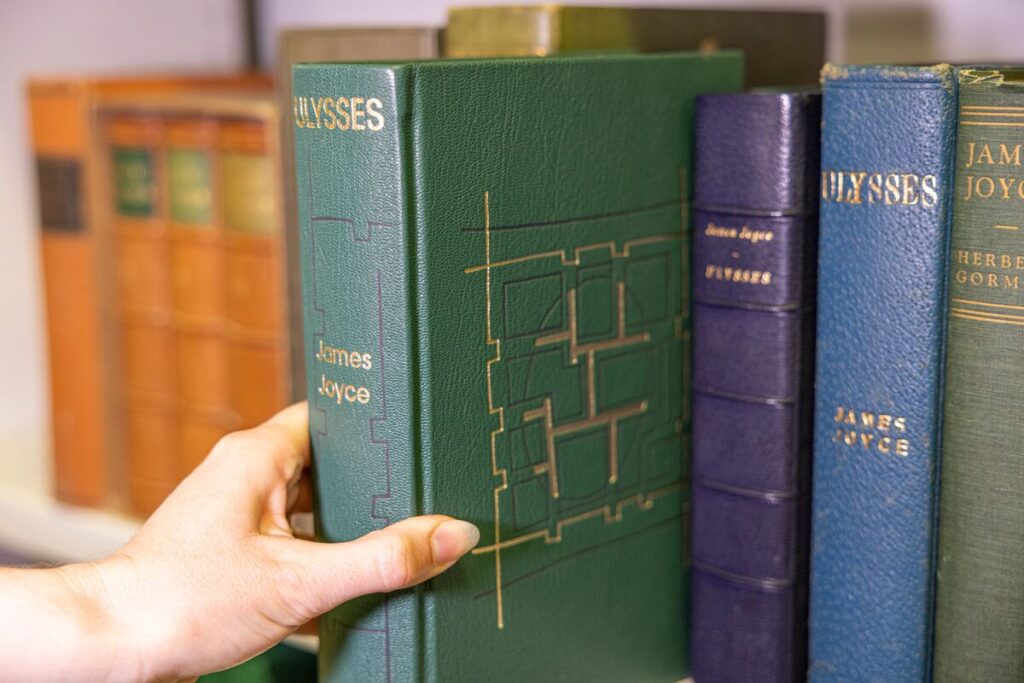
As an example of a more recent publication of ‘Ulysses’, we have chosen a Folio Society edition for the display with a preface by Stephen Joyce, etchings by Mimmo Paladino, and a cover design by Jeff Clements [shown above ] which was published in London in 2004.
The Cat and the Devil
A special feature of the Joyce book collection is a comprehensive collection of illustrated and translated editions of ‘The Cat and the Devil’, a story that Joyce wrote in a letter to Stephen in 1936, when Stephen was four years old.
This children’s story is an adaptation of a popular European folk tale which tells the story of the Devil building a bridge over the Loire River for the town of Beaugency in exchange for the soul of the first person to cross over it. The mayor of the town tricks the Devil by chasing a cat across the bridge instead. The Devil speaks a made-up language called ‘Bellsybabble’, but “when he is very angry he can speak quite bad French though some who have heard him say he has a strong Dublin accent”, which reflects Joyce’s interest in language, word play and playful storytelling. In many of the illustrations Joyce himself is represented as the Devil. In contrast to ‘Finnegans Wake’, which he was writing at the time, this is a simple tale, affectionately told by grandfather to grandson.
In 1964, Stephen decided to have the story published in book format in partnership with the American artist Richard Erdoes, which led to numerous collaborations between Stephen and other children’s book illustrators and translators from around the world. We are very pleased to be able to exhibit some of these editions, which include French, Spanish, Czech and Danish translations, alongside the original letter from the archive that Joyce wrote to Stephen telling the story.
For information about the exhibition ‘James Joyce: Enigmas & Puzzles’, please see here. The exhibition is on display at the University of Reading Special Collections and runs until 8 February 2026.
Works referenced and consulted
Bruce Arnold, The scandal of Ulysses : the life and afterlife of a twentieth century masterpiece. Revised edition. Dublin : Liffey Press, [2004]
Djuna Barnes, ‘James Joyce: A Portrait of the Man Who is, at Present, One of the More Significant Figures in Literature’. Vanity Fair, April 1922.
Cyril Connolly, One hundred key books of the modern movement from England, France & America 1880-1950. London: Allison & Busby 1986.
Eleanor M. Garvey, The artist & the book, 1860-1960 : in Western Europe and the United States, [introduction by Philip Hofer ; catalogue by Eleanor M. Garvey]. Boston : Museum of Fine Arts, 1972.
James Knowlson, Damned to fame : the life of Samuel Beckett. New York : Grove, 1996.
Edna O’Brien,’James Joyce’s Odyssey’: The labors of “Ulysses.” ‘The New Yorker’, May 31, 1999 – https://www.newyorker.com/magazine/1999/06/07/joyces-odyssey
John J. Slocum and Herbert Cahoon, A bibliography of James Joyce, 1882-1941. New Haven : Yale University Press, 1953.
More information
Explore photographs from the personal archive of James Joyce in our recent blog post .
For more information on the Solange and Stephen James Joyce Collection, please see the collection’s web page here.
-
Published Date
- March 9, 2026
Visualising class, disability, and race on the Victorian stage
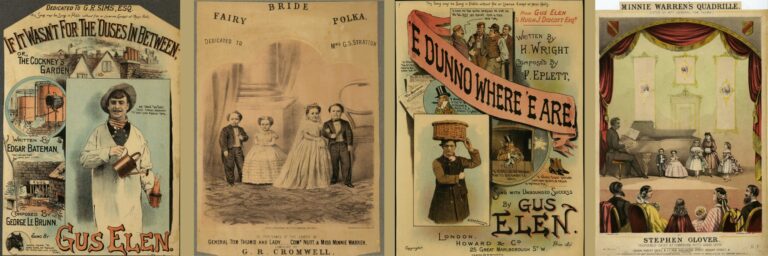
This post introduces, via sheet music covers, a few more real individuals whose stories can be used to explore histories of marginalised people. With only 800 of the covers catalogued so far, there are sure to be countless stories still waiting to be rediscovered.