Incunables identified
-
Author
- micheledrisse
-
Published Date
- April 21, 2016
Written by Erika Delbecque, UMASCS Librarian
Last month we wrote about the process of identifying loose leaves from incunables, books printed in Europe before 1501. We also asked for your help in identifying the remaining four leaves. With help from Geert Lernout and the team behind the Gesamtkatalog der Wiegendrucke, all leaves from incunables have now been identified!
The leaf below was identified as part of Jacobus Magni’s Sophologium, printed by Adolf Rusch around 1470. It is a popular anthology of extracts from ancient and medieval writers including Muhammad Abu Mashar (Persian astrologer), Seneca, and Chaucer. Adolf Rusch (1435-1489) was a printer and paper merchant based in Strasbourg. He was one of the first printers north of the Alps to start using roman instead of Gothic type. Because he did not include his name in the books he printed, he was initially known only as the “R-printer”, referring to a special Roman type capital “R” he uses in his early works. An example of this letter is included on our leaf. Some have argued that it is in fact a monogram derived from his initials, A.R.


A complete copy of this publication can be browsed online here.
The other unidentified fragments were identified as a leaf from Casus longi Sexti et Clementinarum by Élie Regnier (Strasburg, 1496), a leaf from Agenda sive Benedictionale (Basel, 1518) and a leaf from Postilla super totam Bibliam by Nicolaus de Lyra (Rome, 1471-72).
-
Published Date
- March 9, 2026
Visualising class, disability, and race on the Victorian stage
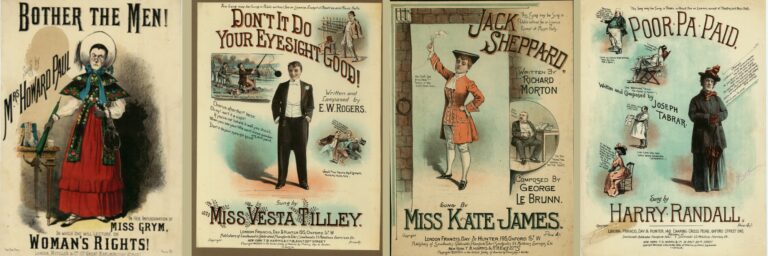
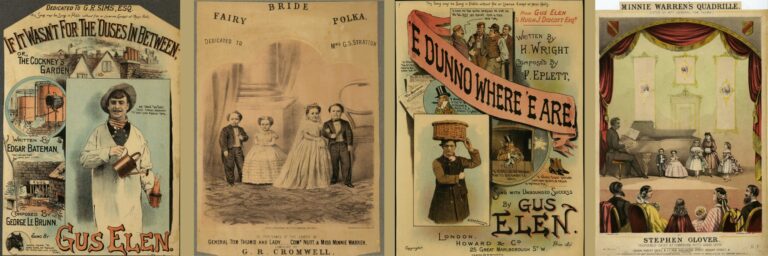
This post introduces, via sheet music covers, a few more real individuals whose stories can be used to explore histories of marginalised people. With only 800 of the covers catalogued so far, there are sure to be countless stories still waiting to be rediscovered.