In the spotlight: Robert Hooke’s Micrographia (1665)
-
Author
- micheledrisse
-
Published Date
- July 28, 2015
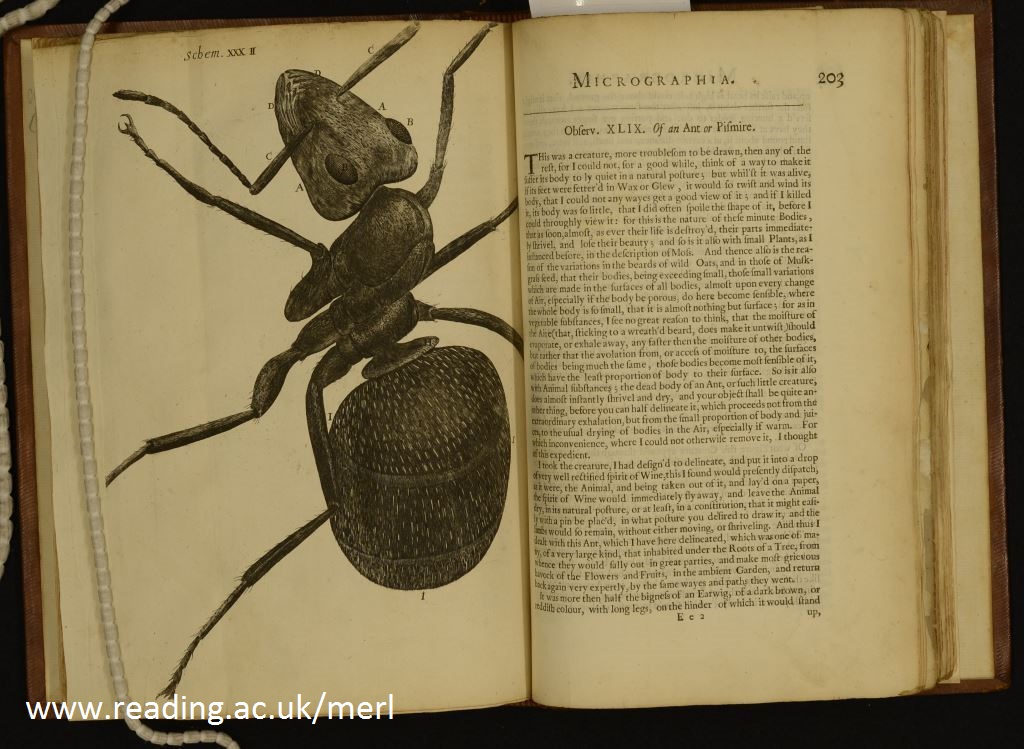
This year marks the 350th anniversary of the publication of Micrographia : or, Some physiological descriptions of minute bodies made by magnifying glasses. With observations and inquiries thereupon (London : Printed by J. Martyn and J. Allestry, 1665). This ground breaking book of microscopy was written by Robert Hooke (1635-1703). Today is the 380th anniversary of Hooke’s birth, below we explore Hooke’s work in more detail.
Robert Hooke (1635-1703) was appointed as the first Curator of Experiments in 1662 at the newly formed Royal Society of London, a position he was to hold for over forty years. The Society was a group of distinguished gentlemen scientists, with a keen interest in inventing scientific instruments. The membership included a number of gifted individuals of the age, including Robert Boyle, Sir Christopher Wren and Sir Isaac Newton.
The Micrographia, which is the Latin word for ‘little pictures’, was published in 1665 and begins with a preface on the state and aims of contemporary science, in which Hooke encourages the gentlemen of our Nation ‘to take up experimental science by emphasising the high rapture and delight of the mind’ enjoyed by scientists.
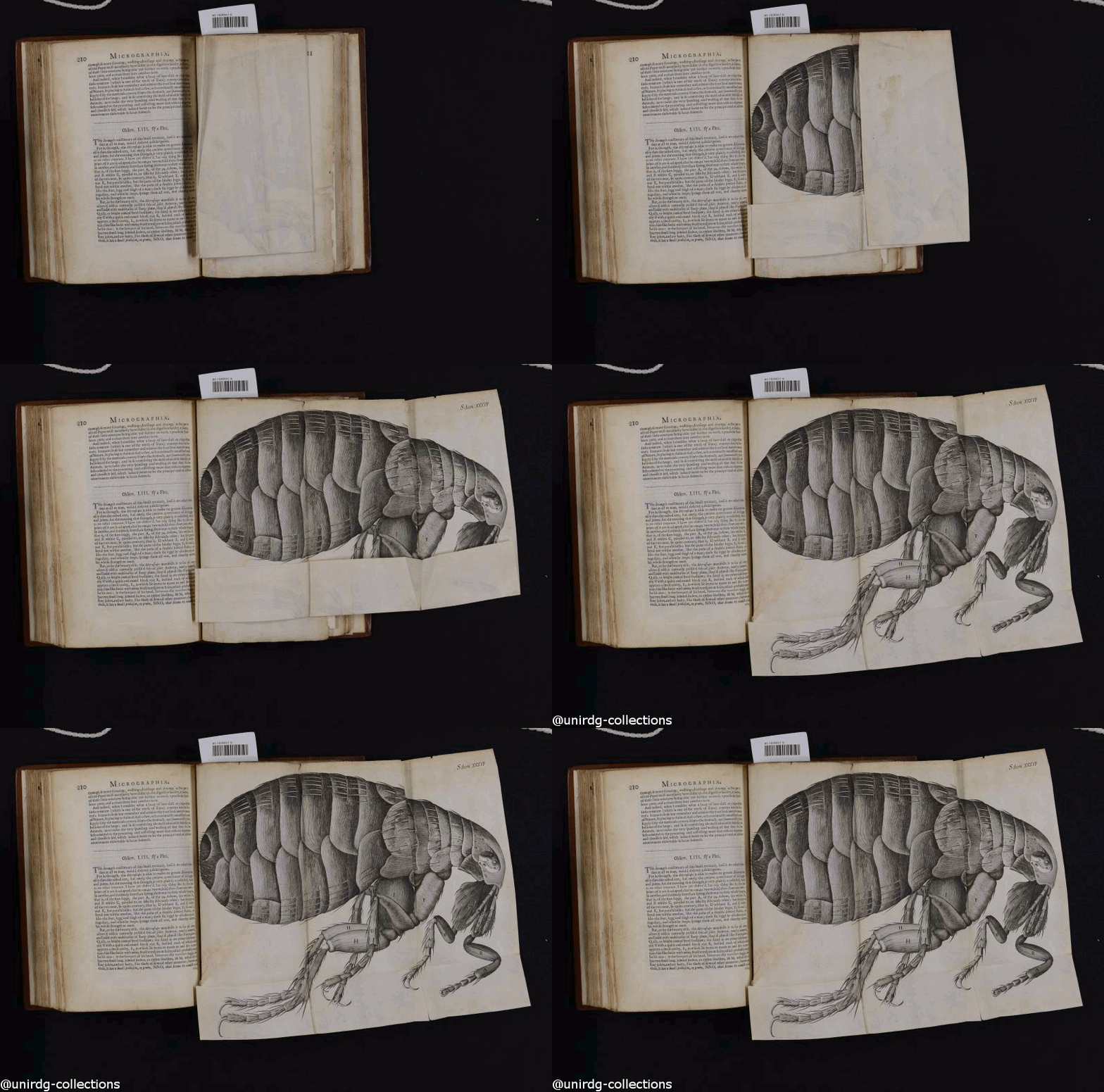
The book is divided into sixty Observations, or scientific explanations, largely based on the magnified structure of a range of objects and natural phenomena, including the sting of a bee, the point of a needle, and extraordinary images of a fly’s head, a flea and a louse. Hooke describes the flea as: ‘adorn’d with [its] curiously polish’d suit of sable Armour’.
Best known for the microscopic images described above, Hooke’s work also contained descriptions of planets and the wave theory of light. Isaac Newton pursued the wave theory of light proposed in Hooke’s work, which influenced his final statement of his theory. Hooke compared the spreading of light vibrations to that of waves in water, and later, in 1672, suggested that the vibrations in light might be perpendicular to the direction of propagation.
The Observations are lavishly illustrated with one hundred fine engraved plates, which display the full diversity of Hooke’s discoveries and research. The engravings are based on Hooke’s original drawings, though there is some suggestion that Sir Christopher Wren may be responsible for the most notable fold-out plates, of the flea and the louse.

For more information on Hooke’s Micrographia, please see this article prepared by our Librarian, Fiona Melhuish on which this post in based.
We hold a first and second edition of Hooke’s Micrographia in our Cole library, contact us on special.collections@reading.ac.uk for more information.
-
Published Date
- March 9, 2026
Visualising class, disability, and race on the Victorian stage
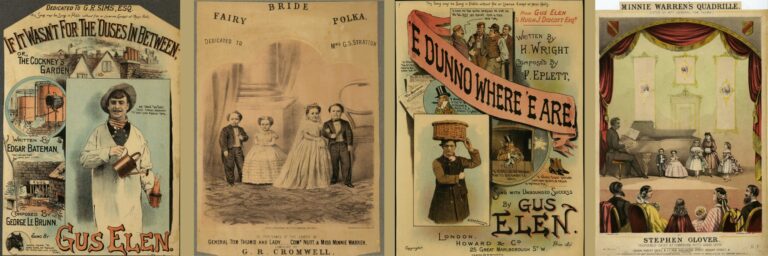
This post introduces, via sheet music covers, a few more real individuals whose stories can be used to explore histories of marginalised people. With only 800 of the covers catalogued so far, there are sure to be countless stories still waiting to be rediscovered.