The A-list archive: filming the Mills & Boon collection for the BBC’s Celebrity Antiques Road Trip
-
Author
- micheledrisse
-
Published Date
- July 16, 2014
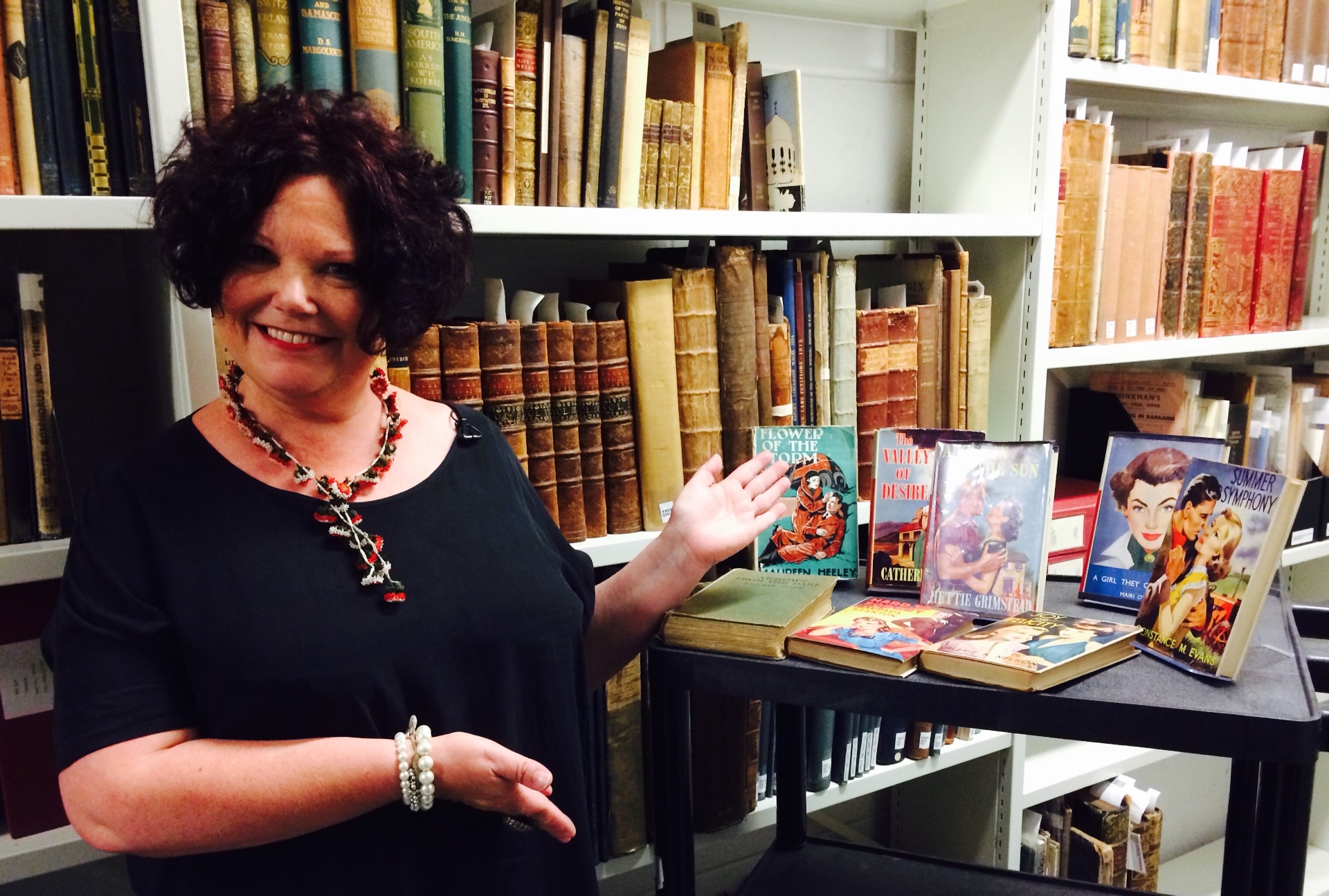
Today’s guest post from Judith Watts explores our Mills & Boon Collection. Judith is studying for her PhD as part of a unique collections-based research project at the University of Reading. The working title of her thesis, which explores the nexus between publisher, author and reader, is The Limits of Desire: the Mills & Boon Romance Market, 1946-1973.

What happens when the archive you’re researching is a star attraction?
Since I began my PhD last October in the British Publishing and Publishing Archive at Reading, I have been thinking about how and why different people have used the Mills & Boon collection to tell a story or support a particular point of view. As mentioned in a previous blog post, the fact that Mills & Boon is a household name means that it has been the subject of a number of TV and radio programmes – especially around the 100-year anniversary of the company in 2009. If you haven’t watched Consuming Passion, Guilty Pleasures, or How to Write a Mills and Boon they are well worth the time. The people behind these projects have approached archival material in different ways to tell their tale of the house of romance. It’s now my turn.
On Valentine’s Day this year I worked with the inspirational archives team here to showcase the collection using the ‘naughty notebook’. In selecting the ‘innuendo’ angle we were able to suggest in a short article how the language of love and desire has changed over time – a narrative which holds special interest for me. It led me to wonder how much we appropriate collections to enhance our own critical thinking or creative acts – and if our subjectivity helps or hinders when we want to engage the interest of others? On 9 July I had to think about this again when reading Special Collections hosted the Celebrity Antiques Road Trip team. This time it was a dual between presenter Rebecca Wilcox and her mother, Esther Rantzen (who had been a guest at the Evacuee archive the previous day). In part of the show the TV personality, together with an antiques expert – in this case, the charming Will Axon – visit a place of interest and are shown its treasures.
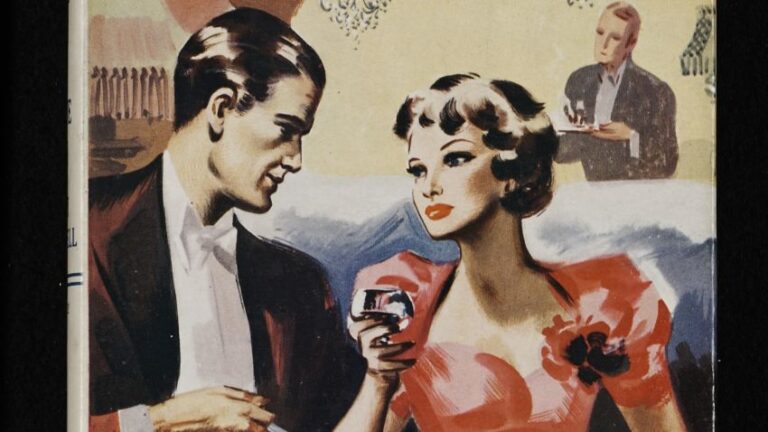
So how do you decide what to share when so much is so significant? Which letters do you extract from thousands to demonstrate the archive’s social, cultural and historical importance? Of the many and varied authors, who do you choose to best represent key parts of the story? Which covers are most evocative or cherished? Squeezing a whole collection into a five-minute broadcast means hard choice. Naturally you think of the audience. What might appeal to the widest range of viewers? How can you catch their attention without perpetuating the myths that exist? Fortunately the BBC researcher had done his homework – we needed to provide context, to cover how M&B grew and reflected the changes in society and notions of romance. But what criteria should I use to select material for its short moment of fame?
In the end I deferred to a thought-provoking article I’d read called Materiality Matters: Experiencing the Displayed Object. While it made sense to choose Betty Beaty and Violet Winspear as different yet representative authors, I selected the objects (letters, a photograph, a postcard, a sketch) which had ‘spoken’ to me, that I had connected with emotionally during my research. Through these evocative objects I felt confident about sharing my passion for the archive with Rebecca and Will. What I hadn’t expected to witness was the spark when Rebecca connected to a letter from Violet to Alan Boon. It referenced her forthcoming appearance on the BBC’s Man Alive programme. Rebecca’s father, Desmond Wilcox, had produced the programme in 1970 when Winspear achieved notoriety for her comments about male heroes. It was fascinating to experience the archive coming to life in this way. In some special way it reduced the distance between us all.

The following day I read a letter in the files about how nice Desmond had been. I’m glad.
I have become very fond of Violet – protective even. She is too often characterised in the Mills & Boon story as the spinster who lived at home with her mother and cat writing racy books. Her thoughts on writing and desire have engaged me at a fundamental level, and I like to think that the archives can tell a fuller version of her story than they have so far. There is also so much more to write about how we attribute meaning and value to objects and how we experience them in archives. But for now I can say that exposing even a small part of the Mills & Boon collection for national TV was great fun – even if it took four hours of filming to create four minutes. Who knows what will make the final cut! I can’t imagine that I won’t be embarrassed when it airs in November, but I hope we managed to leave the viewers wanting more.
Further watching and reading:
- Consuming Passion written by Emma Frost http://www.bbc.co.uk/programmes/b00fcwn0
- Guilty Pleasures, Julie Moggan’s documentary featured in Channel 4’s True Stories series: http://www.channel4.com/programmes/guilty-pleasures/episode-guide
- Stella Duffy rises to the challenge of writing a Mills & Boon novel in BBC 4’s Timeshift series: http://www.bbc.co.uk/programmes/b00ff170
- Materiality Matters: Experiencing the Displayed Object – Sandra Dudley, University of Leicester, University of Michigan, Working Papers in Museum Studies (Number 8, 2012): http://www.ummsp.rackham.umich.edu/files2/8_dudley_2012.pdf
And of course, Celebrity Road Trip in November!
With thanks to all the archives and library team for their help, especially Nancy Fulford for her role as ‘runner’.