Finding primary sources to study the transatlantic slave trade
In this blog post, I reflect on what I learnt during the process of compiling a Subject Explorer about the history of enslavement, using special collections held at the University of Reading. I also signpost research which contributed to this project.
-
Author
- georgiemoore
-
Published Date
- March 24, 2026
What is a subject explorer for?
Subject explorers support students by suggesting primary sources as jumping off points for their dissertation research. The Special Collections team have designed subject explorers for English Literature and History undergraduate students. Although the intended audience is undergraduates, these guides are available to anyone interested in using our collections.
Our existing subject explorers did not cover enslavement, which raised the question of whether there were many relevant sources here at all. There have been – and continue to be – many forms of enslavement and forced labour across the world. This project focussed exclusively on the transatlantic slave trade in the British empire and USA, because this ties into University of Reading history modules.
So far, we have found more than 50 relevant primary sources in our special collections – many more than we expected. These are now highlighted in the subject explorer and available to view in the Reading Room.
Reading collections ‘against the grain’
For decades, historians have been reading individual documents ‘against the grain’. This phrase refers to interrogating sources beyond the creator’s original intention to find ‘hidden histories’. So, can we read entire collections or catalogues against the grain? The MERL and the University of Reading’s Special Collections were not designed for the study of histories of enslavement. Yet, our diverse collections, including material related to agriculture, publishing, and zoology, produced dozens of relevant results when searched critically.
By reading against the grain, historians can identify the agency of marginalised or oppressed groups in sources created by the powerful. In our collections there are very few sources authored by enslaved or formerly enslaved people. We do hold the memoirs of Moses Roper and Solomon Bayley. While these are also useful, we have to acknowledge the influence of white publishers and patrons over the authors’ voice.
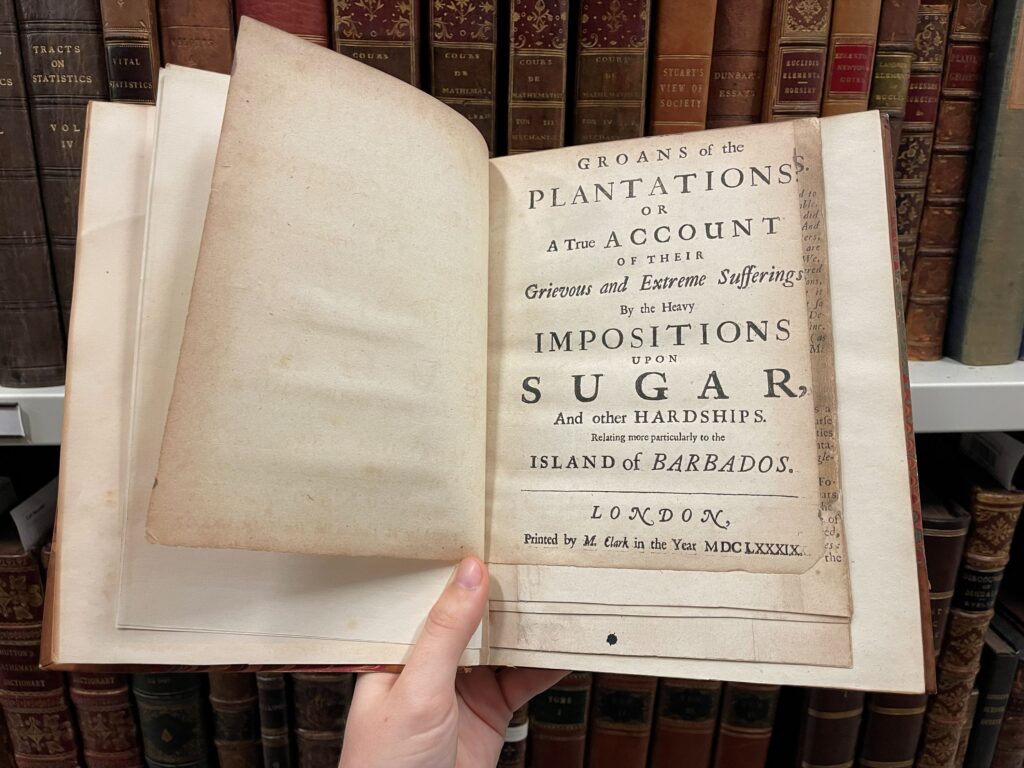
The John and Griselda Lewis collection contains a reward notice commissioned by a slave-owner trying to orchestrate the capture of a man called Abraham (JGL 25/2). Despite being collected as an example of printing ephemera, this notice is testament to Abraham’s escape story. The Runaway Slaves in Britain project has demonstrated how we can read advertisements like this against the grain. These notices described the individual’s skills and physical characteristics so that readers could identify the escaped person. As such, they offer us insight into the agency and individuality of enslaved people.
Being aware of popular culture in primary sources
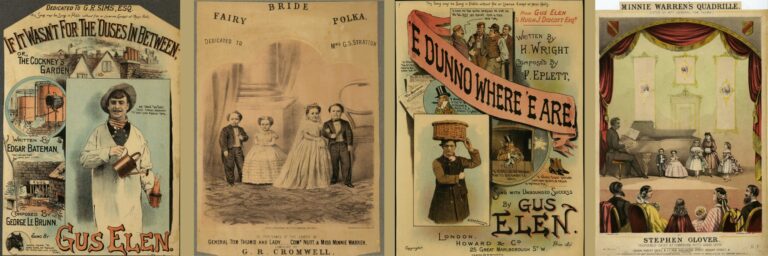
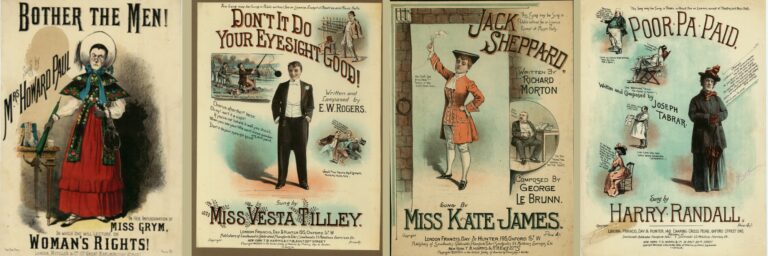
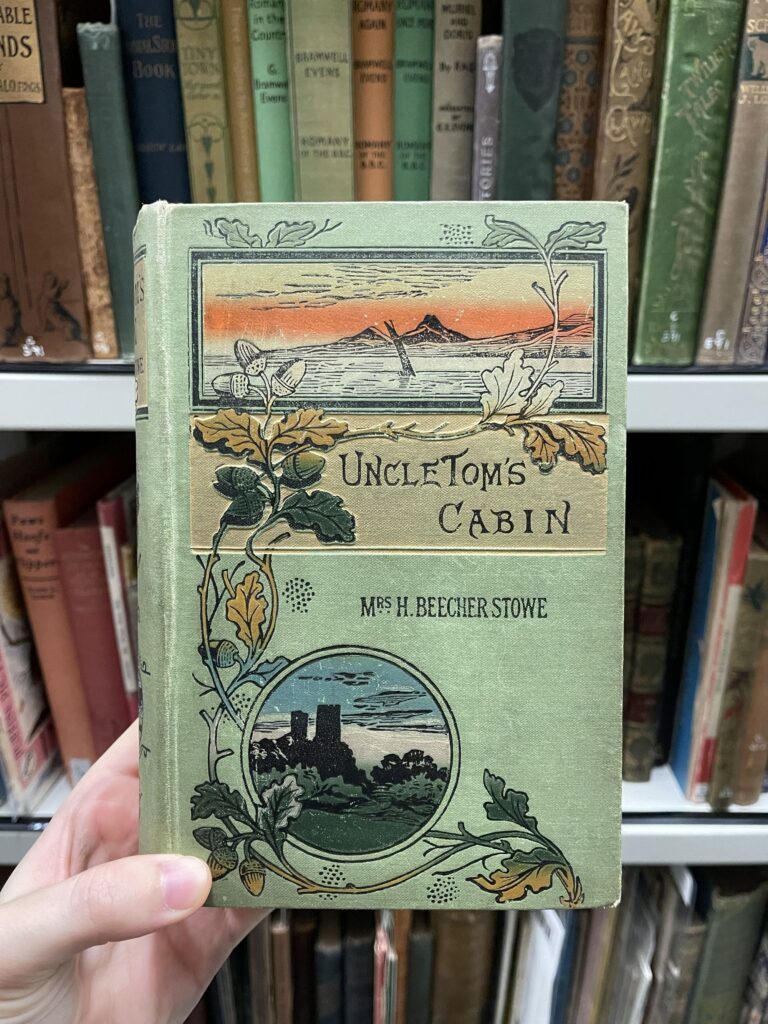
Another project I was working on alongside the subject explorer involved linking catalogue records to digital images of the Spellman Collection of Victorian music covers. I was intrigued by sheet music covers depicting young Black girls (‘Topsy’s song and ”Topsy’s polka’) as well as ‘Eliza’s song’. Using Google, I identified Topsy and Eliza as characters from Harriet Beecher Stowe’s hugely influential novel Uncle Tom’s Cabin (1852). This cultural reference was not mentioned in the existing metadata, although we have now made the addition.
To say Uncle Tom’s Cabin was popular in the 1850s is an understatement. In England alone one and a half million copies were sold within a year of publication. We can expect that many Victorian audiences would have easily recognised the characters. This reminded me that I should always be alert to the wider cultural context of the period I am researching.
We should also note that the meaning of ‘Uncle Tom’ itself has changed. The character was originally interpreted as a hero, before the term acquired its current meaning as an offensive term for regressive images of Black subservience. Although collections material can be offensive, it is important that historical evidence is available for research. Our work around potentially harmful content is ongoing and we welcome feedback about how to approach this material.
Thinking beyond today’s understanding of language and references helps us identify and understand material in context. For more about race as depicted in music covers, explore our blog post on Visualising class, disability, and race on the Victorian stage.
Separating abolitionist sentiment…
Growing up in the UK, I encountered the word ‘abolition’ as a story of good triumphing over evil. At school, I was taught that white British men (and occasionally women) ended the slave trade. Two key truths are diminished in this narrative. Firstly, the brave resistance and activism of enslaved and free Black people is overlooked in favour of ‘great [white] men’. Secondly, the way that abolition was put into practice directly benefited sections of the British population.
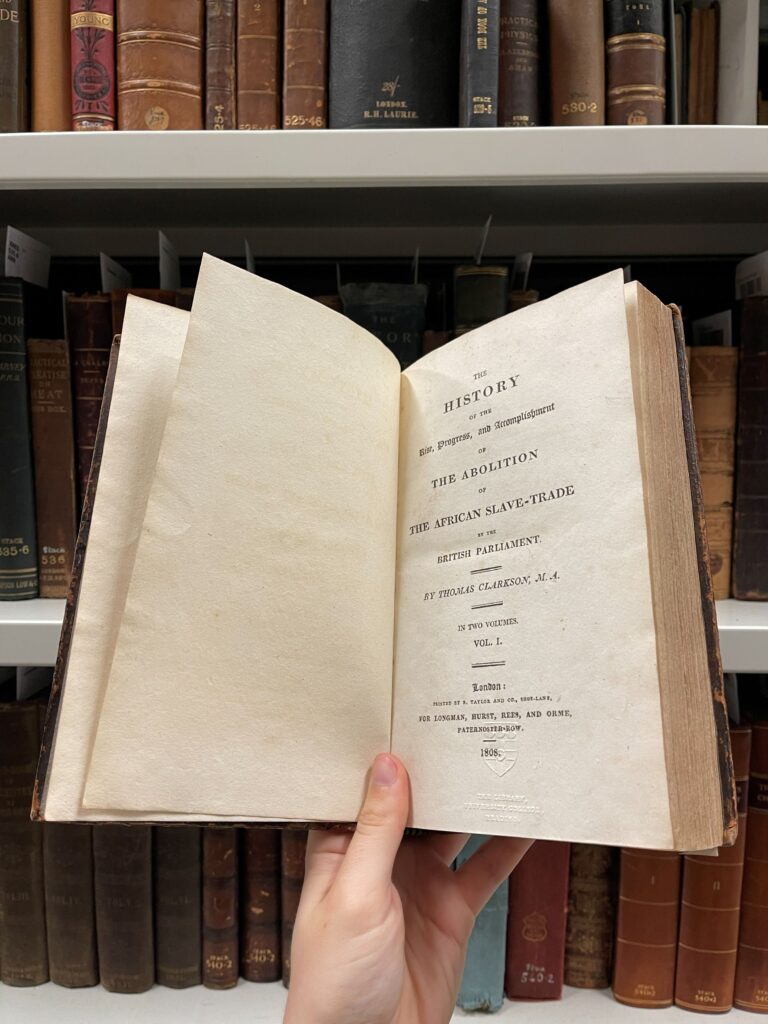
Abolitionists like Thomas Clarkson set about putting their narrative of anti-slavery Britain into words as early as 1808. This was immediately after the abolition of the British slave trade, but still a quarter century before slavery was abolished. Before enslaved people were freed, the groundwork for the myth of Britain as a leading abolitionist power was being laid. Unlearning the myth of Britain’s inevitable leading role in abolitionism is fundamental to accurately understanding this history. Separating the anti-slavery sentiment from the legal and financial processes of abolition contributes to this improved understanding. What’s more, this also provides search terms which we can use to identify relevant material in the catalogue.
…from the processes of abolition
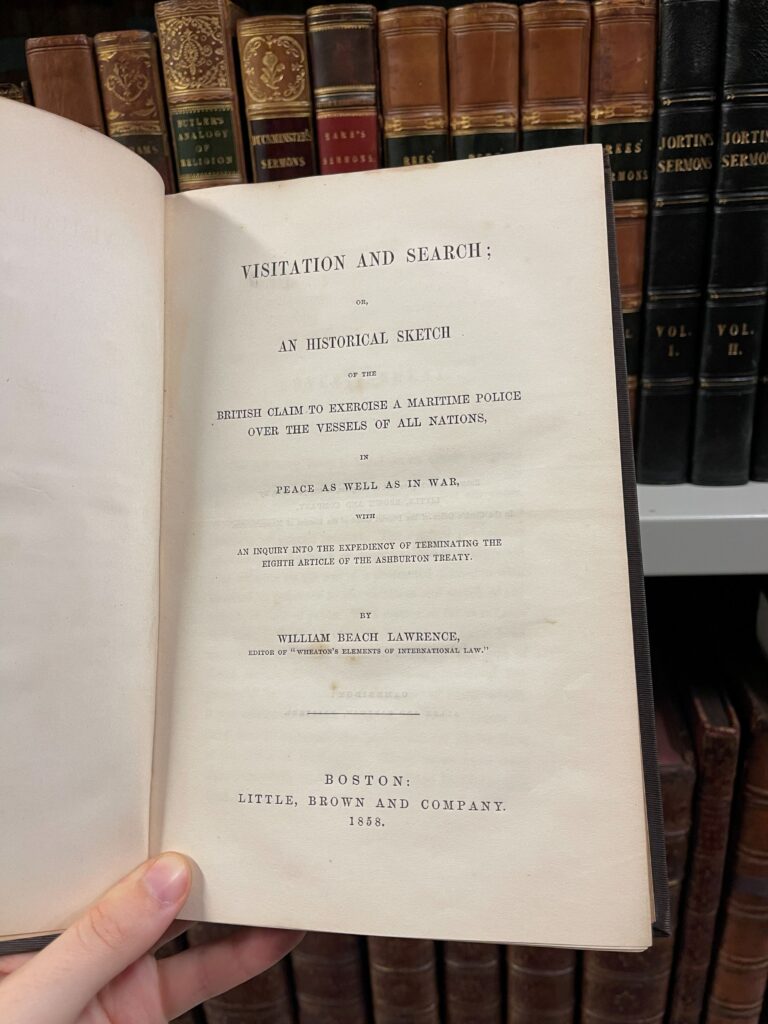
In keyword searches, abolitionist narratives are more likely to be found than books about the processes that enabled abolition. It is only when using the subject heading ‘Search, right of’, that Enterprise reveals Lawrence’sVisitation and search, for example. Here, the ‘Right of Search’ refers to British ships intercepting vessels suspected of trafficking enslaved people from other countries. The British navy then ‘repatriated’ these ‘liberated Africans’ to the west coast of Africa. Therefore, in this context, the ‘Right of Search’ is a mechanism of abolition.
So-called ‘liberated Africans’ were not repatriated to their specific home region nor released as free people. Instead, they were apprenticed out and the profits from their labour helped fund the bounty to the intercepting ship’s captain. Clearly, these navy vessels were not acting out of disinterested benevolence. Although a subject heading like ‘anti-slavery’ may not be appropriate, the ambiguous ‘Search, right of’ makes it harder to find this history.
What do you think about the subject explorer?
When compiling the subject explorer, I attempted to bring out as many aspects of this history as possible. I hope that it will be useful to students interested in researching the history of enslavement. However, I am conscious that as the work of one person, there will inevitably be gaps and flaws. With that in mind, I encourage users to contact us with suggested additions and further insights.
Recommended reading and resources
The dissertation subject explorers:
Michel-Rolph Trouillot, Silencing the past: power and the production of history, (Boston: Beacon Press, 1995).
The Centre for the Study of the Legacies of British Slavery (CSLBS) based at UCL. The Centre is currently chaired by Professor Catherine Hall and directed by Professor Matthew J. Smith. You can search the ‘Legacies of British Slavery’ database online to explore the individuals and organisations who profited from slave-ownership and the compensation paid by the British government.
‘Runaway Slaves in Britain : bondage, freedom and race in the eighteenth century’ from the University of Glasgow traces people of African, Indian and indigenous descent in eighteenth century Britain, mostly using newspaper advertisements .
Patricia Turner and Michael Martin, ‘Why African-Americans Loathe ‘Uncle Tom’ [radio] on Tell me more (NPR), broadcast 30 July 2008, accessed 9 March 2026.
Audrey Fisch, “Uncle Tom and Harriet Beecher Stowe in England” in The Cambridge Companion to Harriet Beecher Stowe, ed. Cindy Weinstein, (Cambridge: Cambridge University Press, 2004).
Henry B. Lovejoy and Richard Anderson, Liberated Africans and the Abolition of the Slave Trade, 1807–1896, (Rochester, NY : University of Rochester Press, 2020).
LiberatedAfricans.org, created by Digital Slavery Research Lab, under the direction of Henry Lovejoy, and in partnership with Walk With Web, under the direction of Kartikay Chadha.
Padraic X. Scanlan, Freedom’s debtors : British Antislavery in Sierra Leone in the Age of Revolution, (New Haven, CT: Yale University Press, 2017).