
University Heritage – Whiteknights Park, 1783-1798

A look at Whiteknights Park under the ownership of William Byam Martin Sr. (1744- 1808) and the improvements made to the estate during this period.
The materials in this online exhibition were compiled by The Friends of the University of Reading as part of their University Heritage leaflet series. For further information about The Friends, including their annual programme of events, list of completed projects and printable copies of the University Heritage leaflets, please visit: thefriends.org.uk
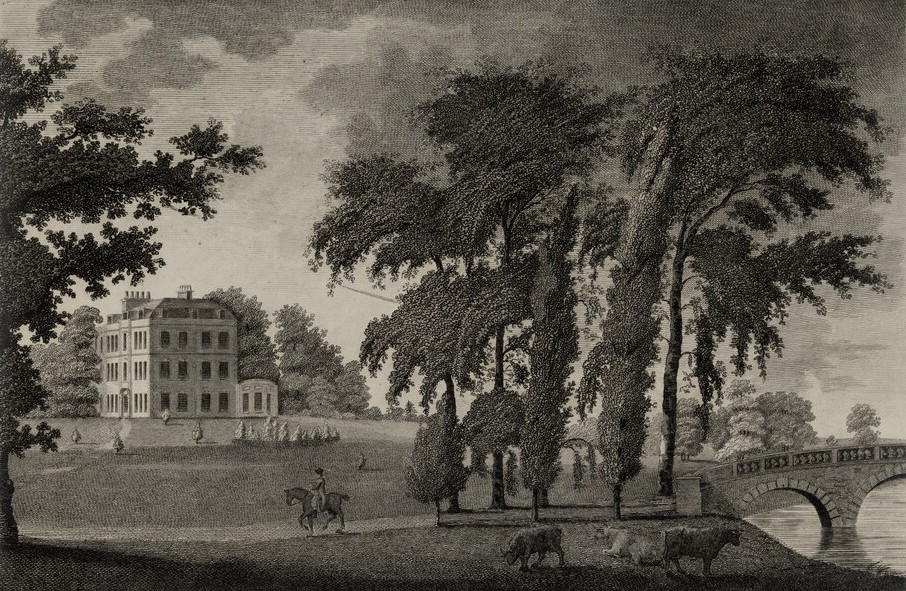
Featured Image: “White-Knights” from an original drawing by Govr. Pownall [RESERVE MIDDLE FOLIO–914.2291-HOF (Copy 1)]
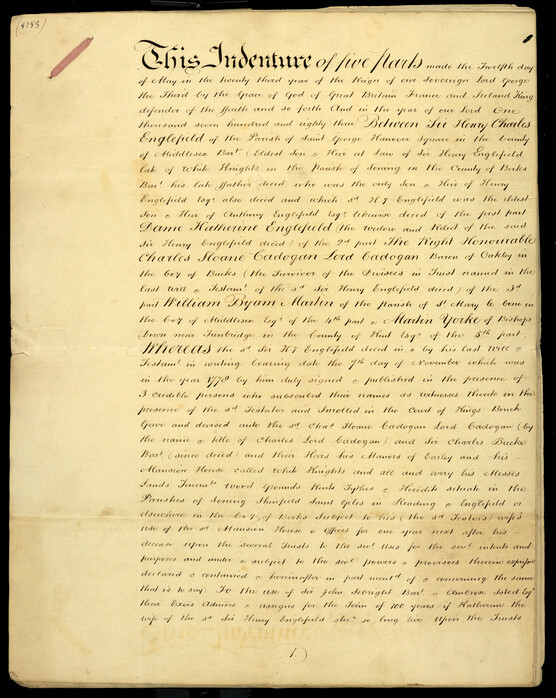
Byam Martin and the Purchase of the Estate
William Byam Martin was of a wealthy family that had derived its riches from sugar estates established by his grandfather in the Caribbean. His first employment was in Bengal in 1765 as a ‘writer’ for the East India Company. A successful career in India enabled him to accumulate a fortune sufficient to support his retirement in 1871. He returned to England and purchased the Whiteknights estate from the Englefield family, who had owned it at various periods since during the previous 200 years.
(MS 145/EN 1/2/59 – Document showing the sale of the estate in 1783)
Improvements to the Estate
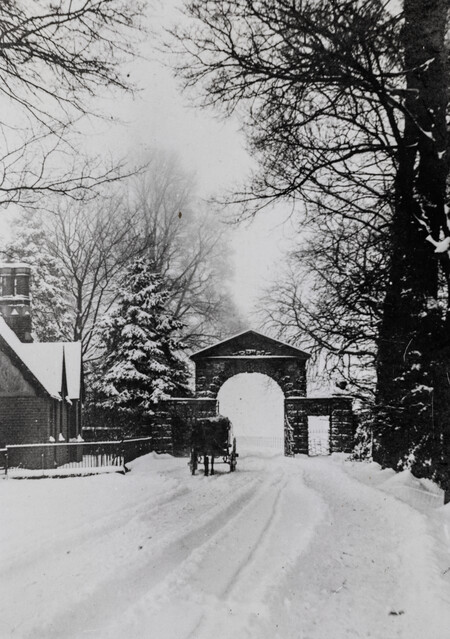
Byam Martin commissioned Samuel Pepys Cockerell (1753-1827), an eminent architect and Surveyor-General to the EIC, to assist him in improving the estate. Cockerell (a great-great-nephew of the diarist) made additions to the mansion and created two striking rusticated stone landscape features to add grandeur to the mansion’s environs.
One was a sturdy three-arched bridge over the lake on the drive from the present Earley Gate entrance. The other was a triumphal archway as a fitting approach to the mansion from Shinfield Road. Both structures remained in place until the 1950s though by then both had severely deteriorated. The bridge was replaced by the now-named Friends Bridge in 1962 but the archway collapsed and was not rebuilt.
(UHC PH3/5/25/1)
Sale of the Estate
After improving the mansion and the grounds, he sold the estate to the Marlborough Family Trustees who leased it to the Marquess of Blandford. His Grace spent lavishly on elaborate developments within the mansion and to the gardens but his profligacy led to bankruptcy. On his father’s death in 1817 the Marquess became the 5th Duke of Marlborough and in 1819 he fled to Blenheim Palace, the family seat.
(UAC/10965)