
From this place, on this day – an exhibition celebrating the University of Reading’s Centenary
I
From this place, on this day
2026 is the University of Reading’s centenary year, marking 100 years since it was granted a Royal Charter. On 17 March 2026 The Court, the University’s supreme governing body, held its annual meeting in the Great Hall on the actual anniversary day. This was an opportunity, in the words of the Vice-Chancellor, to “celebrate the collective achievements of our communities around the world and reaffirm our commitment to creating change together”.
A pop-up display highlighting key items provided space for reflection on the past, alongside the Centenary Timeline (https://www.reading.ac.uk/centenary/centenary-timeline).
This online exhibition is a recreation of that pop-up display.
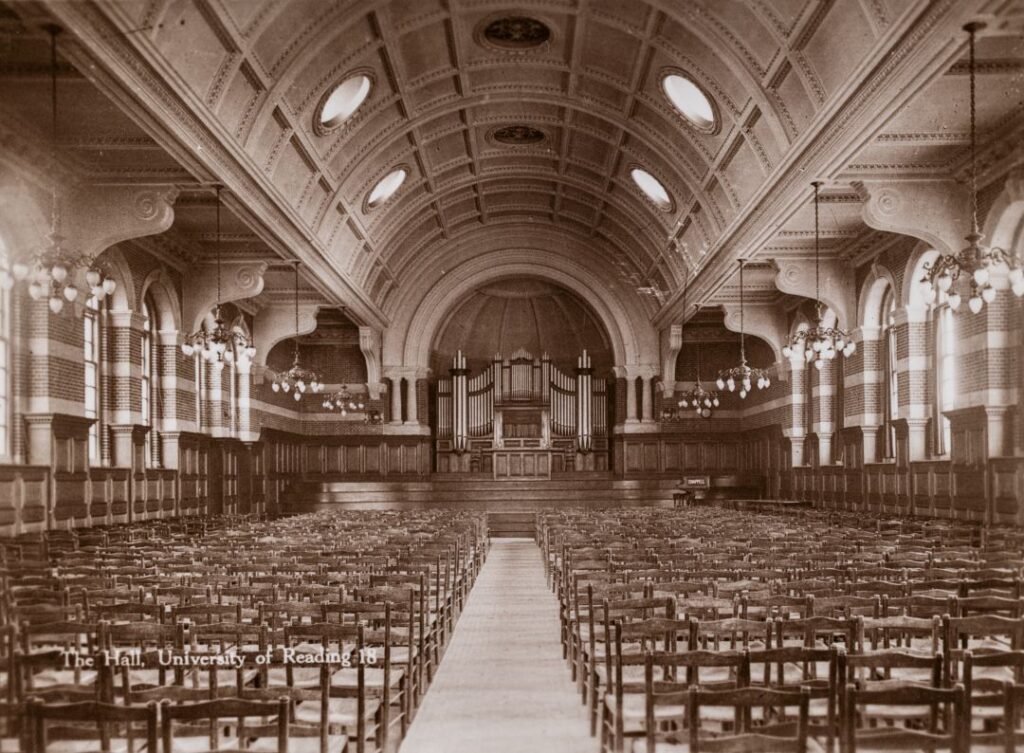
Interior view of the Great Hall, London Road (UHC PH3/4/1/32)
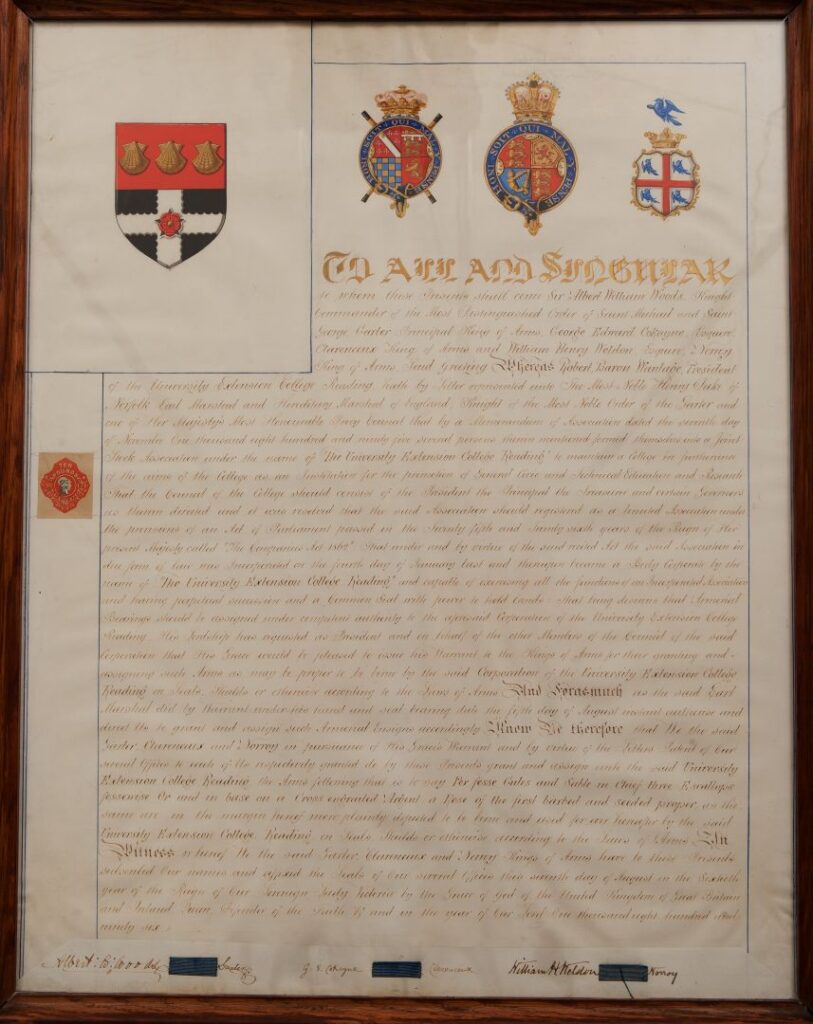
The Grant of Arms, 1896
University education came to Reading in 1885 with an Oxford University ‘extension unit’ and in 1892 merged with the existing Schools of Science and Art to form the University College. As the institution developed its identity, a formal Grant of Arms was awarded in 1896.
The coat of arms remains the centrepiece of the University’s corporate identity and features in many places across the University, including the Japanese Peace Gates on this campus.
Grant of Arms to the University Extension College, 1896 (UHC CM1/8)
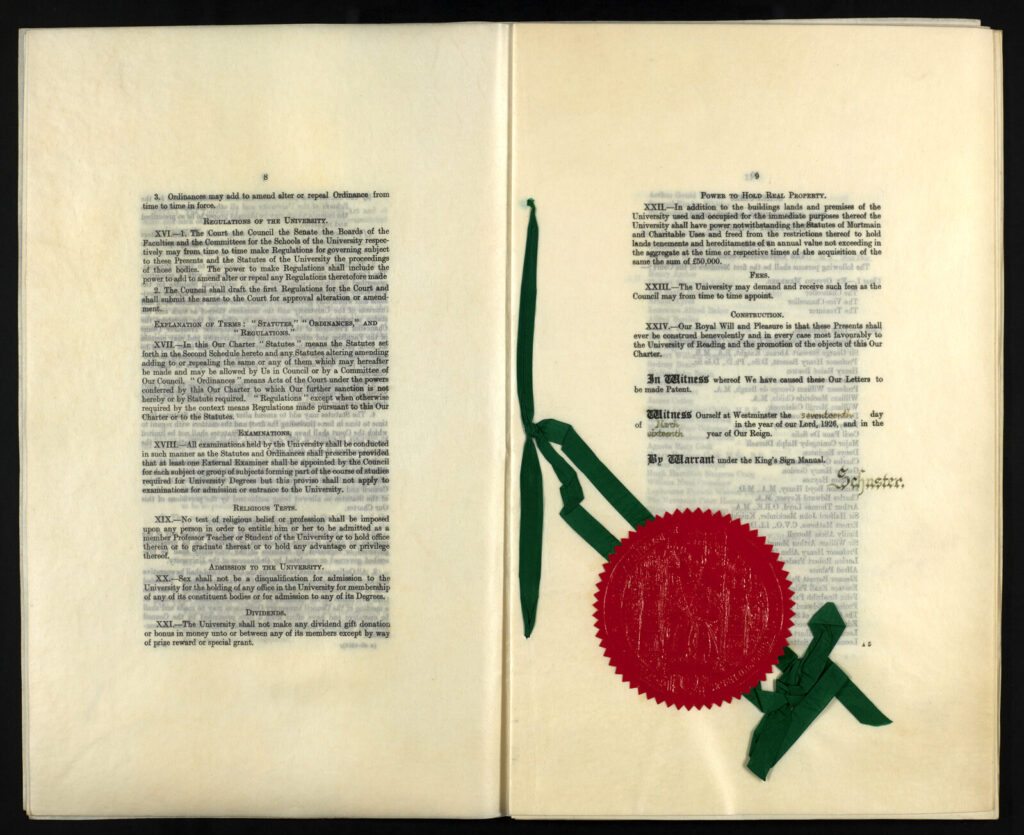
The Charter, 1926
The College expanded its range of subjects and the demand for space led to a move here to London Road, thanks to generous benefactors such as the Palmer family and Lord and Lady Wantage.
From that moment the drive towards separate University status began to gather pace, and the University of Reading was created when we received our Royal Charter in 1926. The Charter is a modest document compared to the earlier Grant of Arms.
University of Reading Charter, 1926 (Courtesy of The University Secretary)
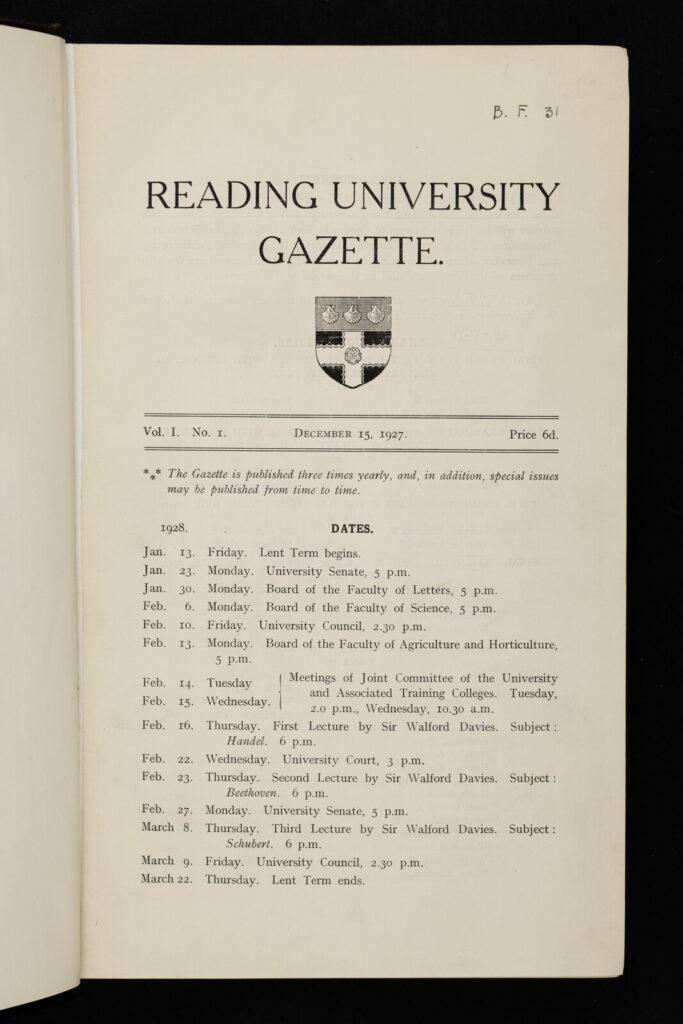
Reading University Gazette, 1927
First published in 1927, the Gazette recorded the official proceedings of the University, including W.M. Childs’s statement to the first meeting of the Court, in which he proclaimed that “this University is alive, purposeful, and full of promise”.
Reading University gazette, Vol. 1, no. 1 (15 Dec. 1927) (UNIVERSITY HISTORY COLLECTION–GAZ)
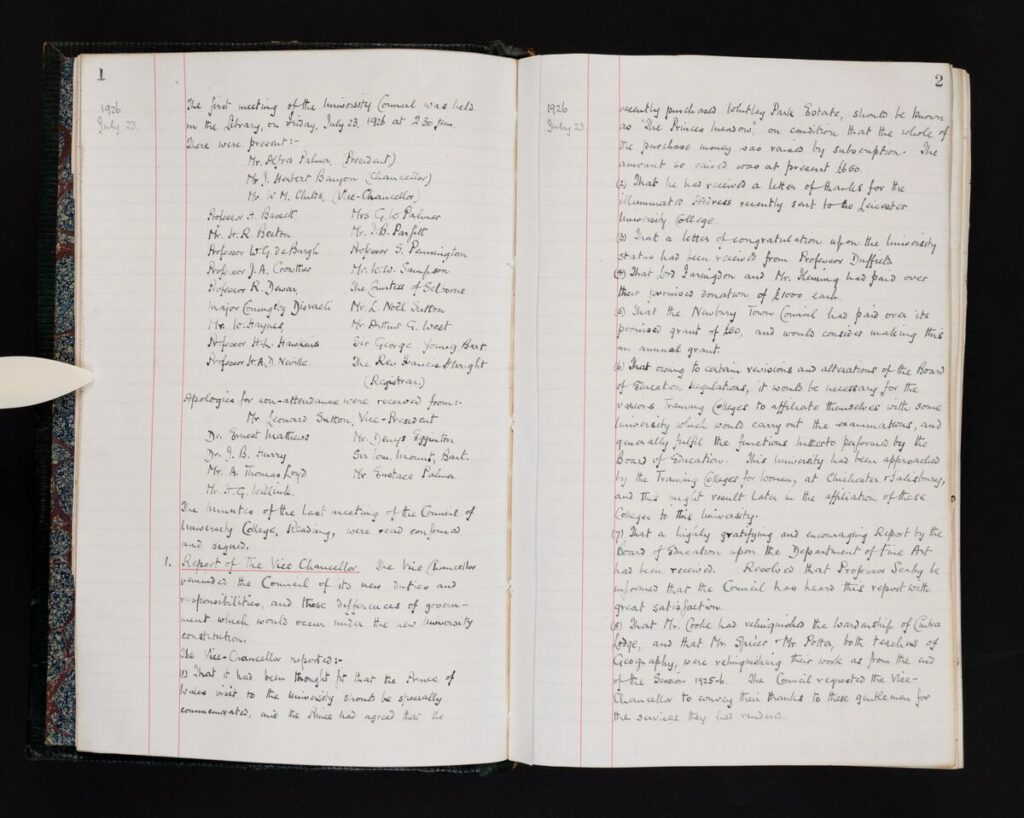
Minutes of the University Council, 1926
This volume records the very first meeting of the University Council, held in the Library on the 23rd July 1926 just months after the institution was founded. From the minute book, we see that plenty of business was already pressing: a potential Royal visit, changes to education regulations and the letting of buildings. There is also praise for Fine Art, the University’s founding department.
Minute book of the University Council, 1926 (Courtesy The University Secretary)
Official regulations for the University Mace, from the Registrar’s files, 1926
The display of the ceremonial robes and the Mace reminds us that, as the first university to receive its Charter since WWI, Reading quickly needed to establish new protocols. These notes show that they initially looked at practice elsewhere but ended up taking their own line:
Extract from Council Minutes, December 3. 1926
The Mace. The Vice-Chacellor reported that it had been found that in other Universities there were no formal regulations with regard to the use of the Mace. The Council resolved that the Vice-Chancellor should have the custody of the Mace, and that he should at his discretion make arrangments for its use
From: Folder of papers originally entitled ‘Official Regulations and Inventories’ (UHC CM9/11/1)
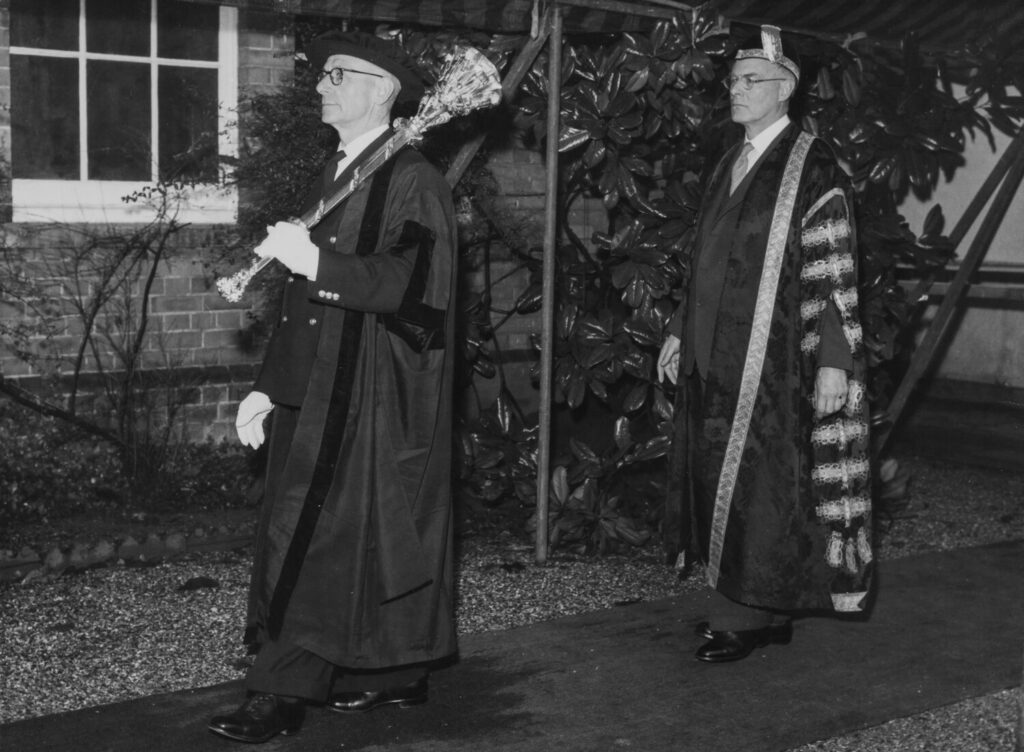
That there were long discussions in Council and Senate of these matters may seem odd, but the University’s leadership would have been aware that, within three years, they would need to plan graduation ceremonies. They would also have recognised that a Royal Charter – a form of governance dating back to at least the 13th century – is designed to emphasise continuity. The University’s largely unchanged ceremonies make the same point: it is well-established and here to stay.
Photograph of part of an academic procession for congregation featuring the Head Porter H F Johnson and the Chancellor Lord Bridges, carrying the ceremonial mace, c.1959-1969 (UHC PH3/11/38/6)
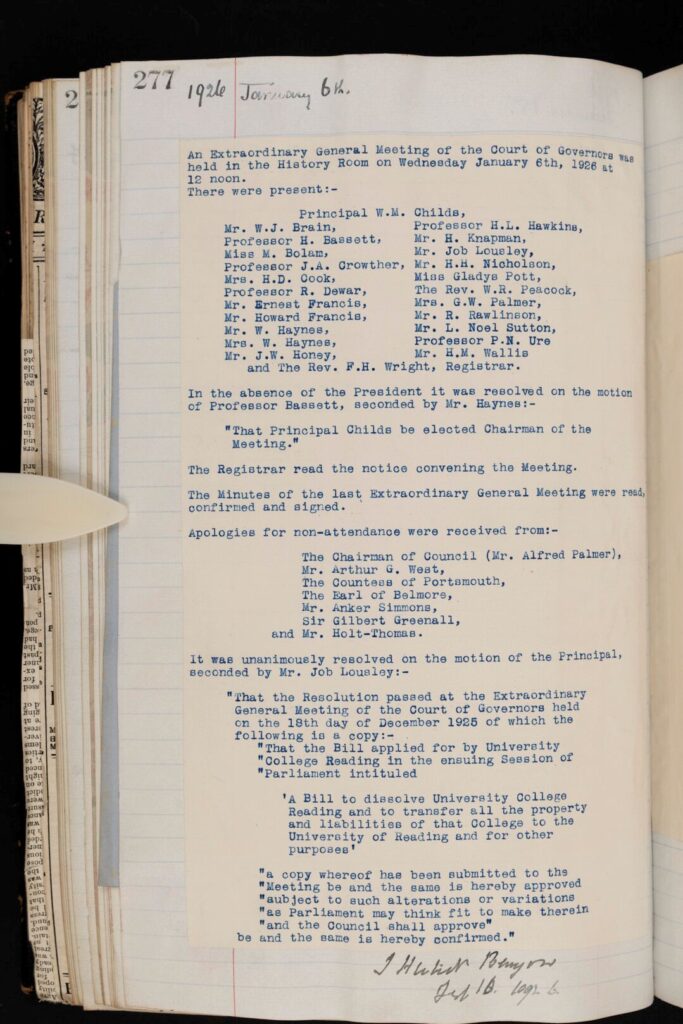
Court minutes before and after the Charter – University Extension College,1926
These two volumes show both continuity and change. At the end of the first volume we see the winding up – by Act of Parliament – of the old governing structures. In the second, we see the first gathering of the new University Court.
Court of Governors Minute Book 1 (Courtesy of The University Secretary)
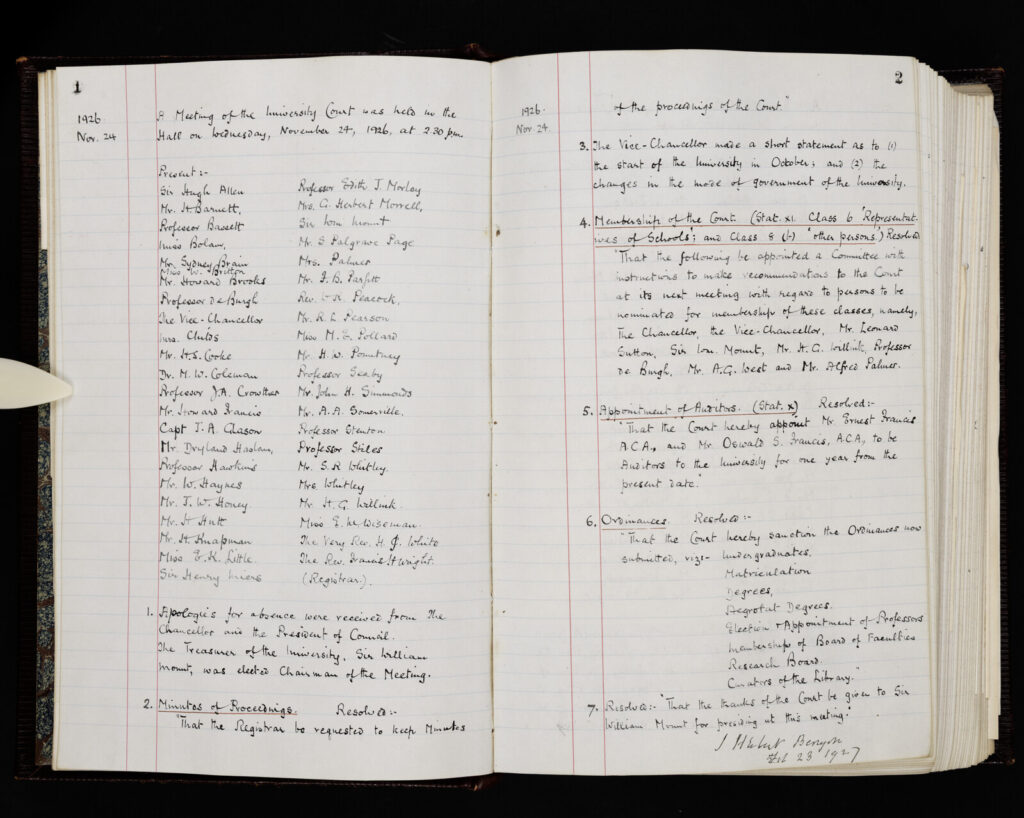
Court minutes before and after the Charter – University of Reading, 1926
Unsurprisingly, many of the names carry across from one to the other, as the whole community celebrates its past achievements while looking to the future.
One hundred years on, the annual meeting of Court continues to provide an opportunity to welcome the University’s community of external stakeholders – local, national and global – to hear of its progress and achievements the past year.
University Court Minutes, November 1926 (Courtesy of The University Secretary)
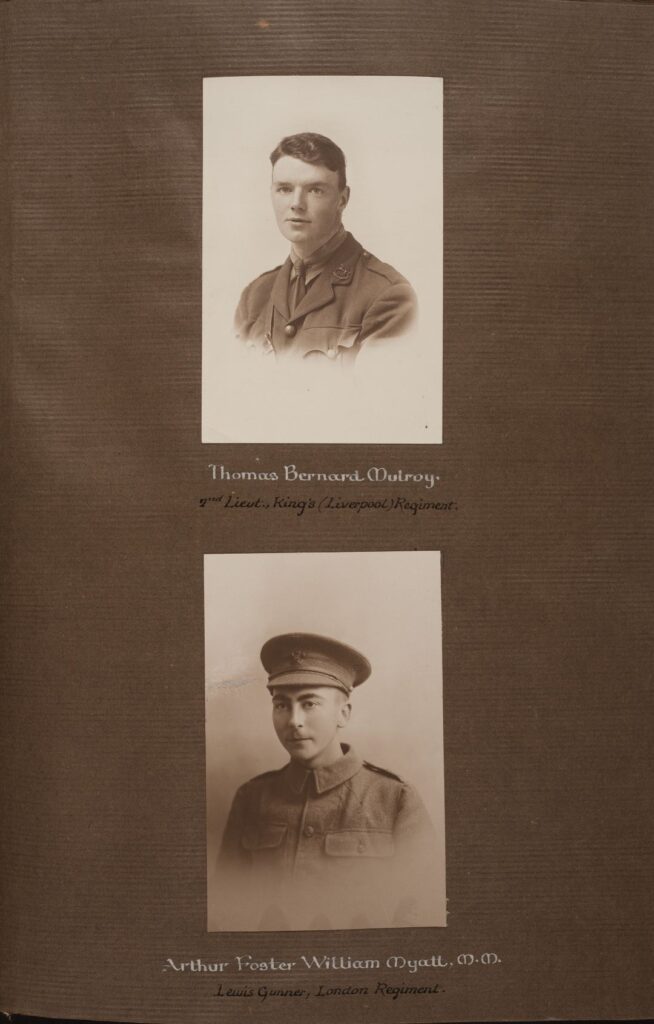
Book of Remembrance of those Members of The University College Reading who fell in The War 1914-1918
In November 1915 Doris Nölting, a member of the Student Representative Council, proposed that “photographs of those members of the College fallen in the war be obtained and hung at some future date”. By late 1919 it was decided that the photographs received should be placed in an album.
The work was completed by 1920, and appears to have been carried out by Clara Wilson, a former student of Fine Art. The album contains photographs of 119 individuals and the names of 24 others.
Interest continued in subsequent decades: in 1932 there was an appeal in Tamesis for information about Florence Faithfull, the only woman to be named in the book or on the memorial.
Book of Remembrance of those Members of The University College Reading who fell in The War 1914-1918 (MS 5539)
War memorial project
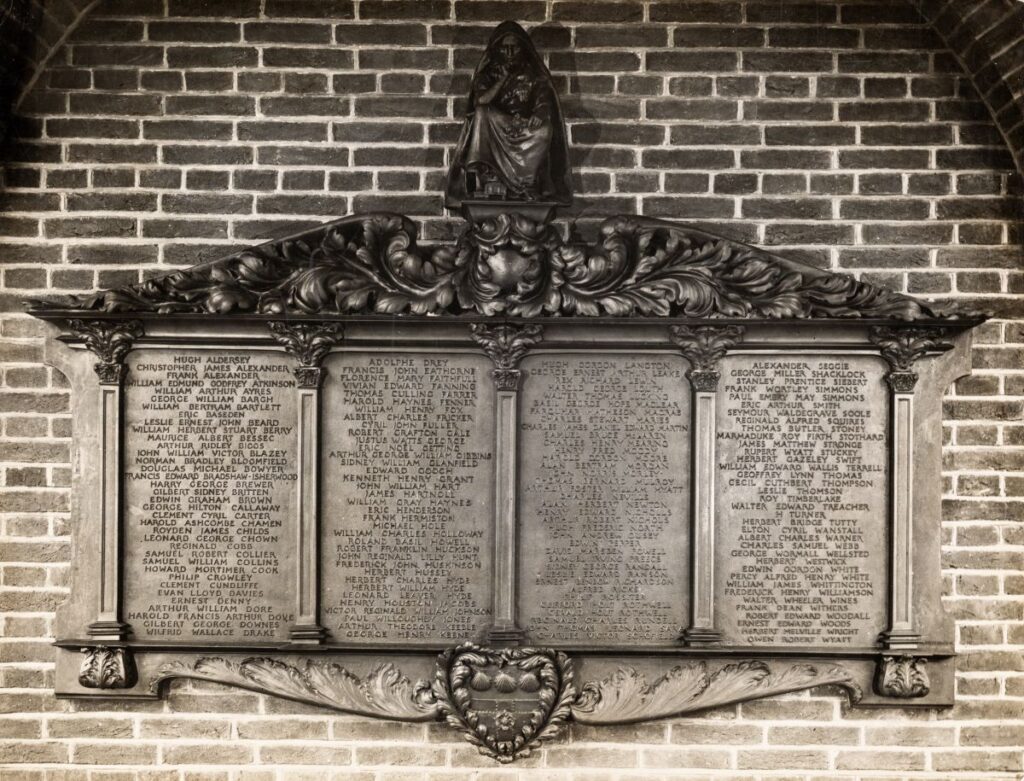
In 2013 the digitisation of this volume sparked a remarkable community volunteer project to find more out about those recorded in its pages. It was notable that two of those in the book, Wilfred Owen (the celebrated war poet) and Francis Edgar Pearse, were not listed on the plaque adorning the war memorial clock tower.
Volunteer Jeremy Jones has spent the past thirteen years tracking down additional information and has identified at least 30 individuals, in addition to Owen and Pearse, whose names were never inscribed on the memorial, despite giving their lives in the First World War.
This November their names will be added to the clock tower, which was designed by Herbert Maryon, a member of staff in the Fine Art department, and dedicated on 7 June 1924.
World War I memorial plaque, mounted on the War Memorial Clock Tower on London Campus
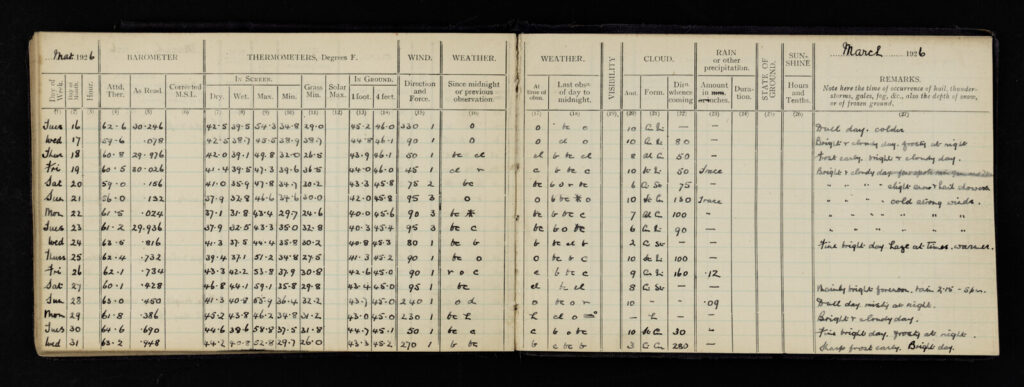
Register for normal climatological observations, 1924-1926
After the Second World War, the UK’s Meteorological Office was reorganised and moved to Bracknell, so a collaboration with the University made sense. In 1965-66 a BSc programme began and a Department was established, placing Reading at the heart of the UK’s meteorological training.
The recording of meteorological observations on our campuses pre-dated this. On the day that the Charter was granted, 17 March 1926, the weather was cloudy but dry.
Pioneering research has always been a hallmark of the department. As the citation for the 2005 Queens Anniversary Prize stated, ‘The Department has made exceptional contributions to science that has profoundly changed the way we think about weather and climate.”
Register for normal climatological observations, 1924-1926 (Courtesy of Meteorology Department)
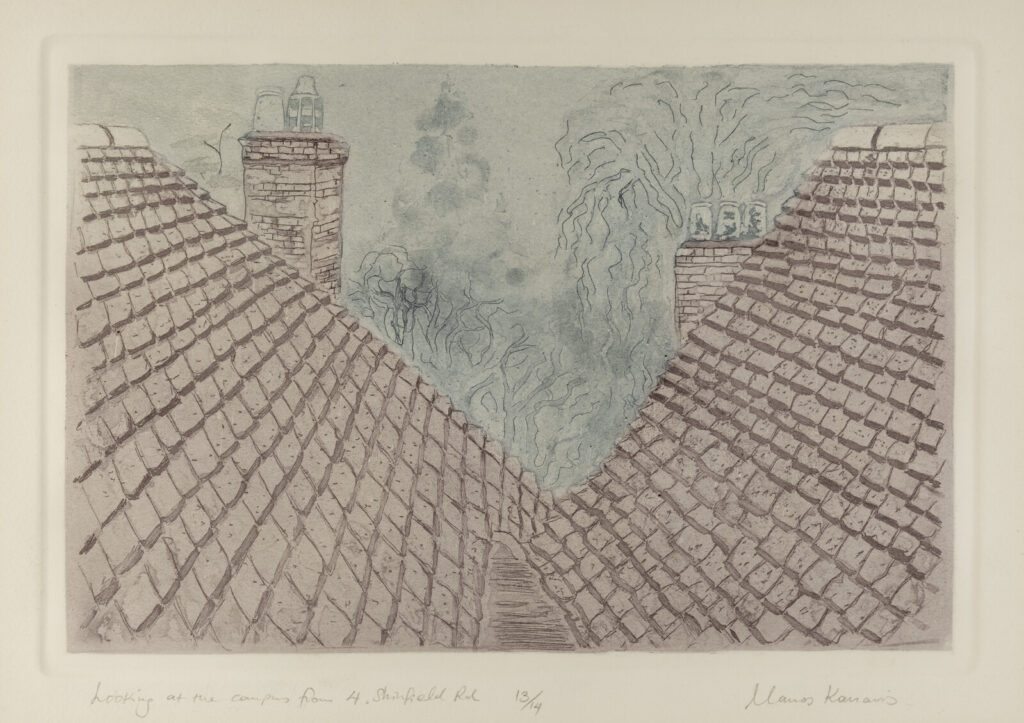
Looking at the campus from 4, Shinfield Road by Manos Kanaris
Chosen by Jack Jones, Museum Studies student.
This print, dating from the late 1980s or early 1990s, was chosen as it links well to the theme of the exhibition: different experiences and views around the University.
Manos Kanaris, like many of us, lived in student accommodation whilst studying here. This view not only captures the perspective of a Reading alumnus in a very literal sense but also speaks to the student experience in a more general way.
Kanaris was a postgraduate student in the Department of Geography.
Looking at the campus from 4, Shinfield Road by Manos Kanaris, c.1988-1992 (UAC/10460)
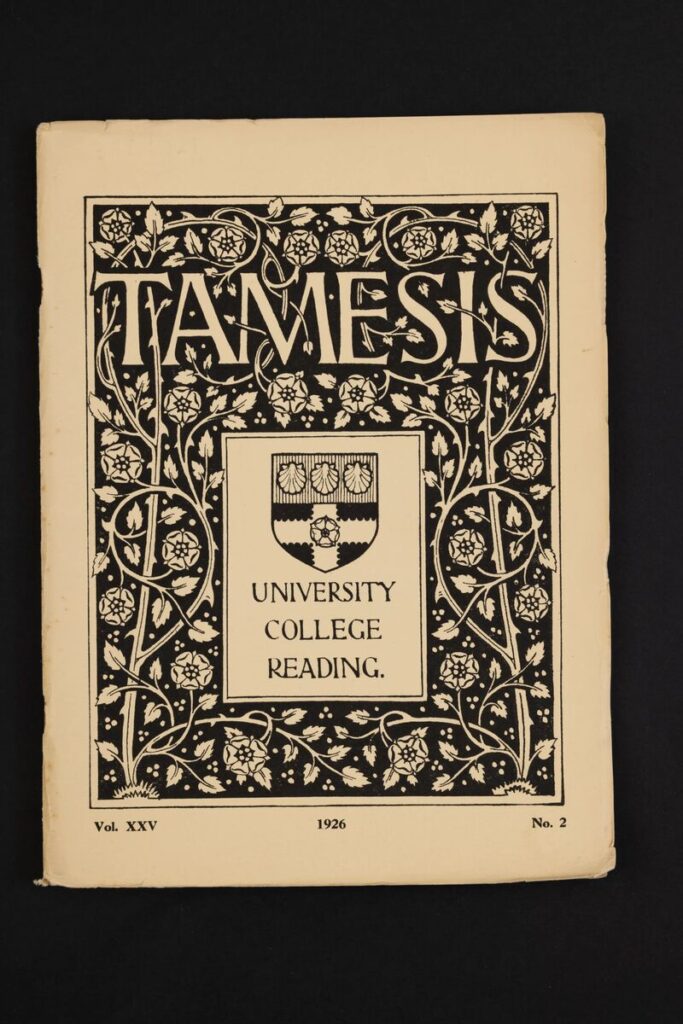
Tamesis cover, vol.25 no.3,1926
Chosen by Eloise Sophocleous, Museum Studies student.
I chose this object as it celebrates Reading becoming a university. This issue includes an editorial by the new Vice-Chancellor, W.M Childs.
It also includes articles, poems, short stories and drawings by students. Celebrating student voices is a key element of our exhibition.
“Tamesis” was the official Reading College (and then University of Reading) magazine which ran from 1910-73. Its title references the Romano-British name for the River Thames, a name first recorded in the writings of Julius Caesar.
Tamesis cover, vol.25 no.3,1926
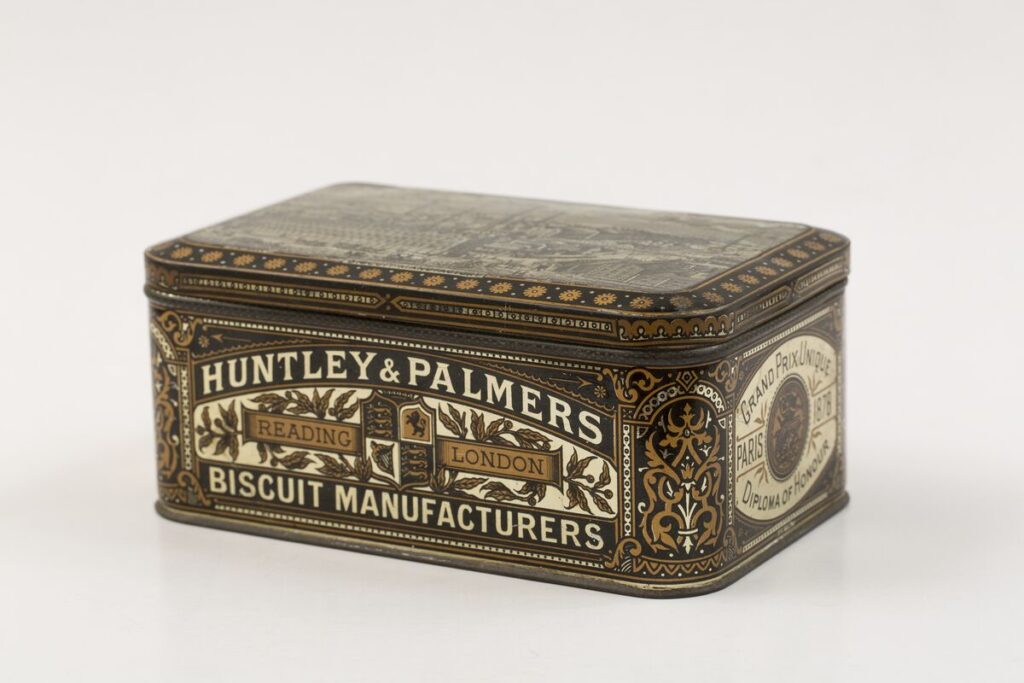
Huntley and Palmers Biscuit tin, 1877
Chosen by Jack Jones, Museum Studies student.
This biscuit tin indirectly represents years of queer protest at the University of Reading. It was chosen partially as a way to embody this activism, but also as a way to showcase a different approach to museum exhibition. Important contextual stories can sometimes be intangible. Using physical objects as visual reference points instead of long written labels is an effective way to engage a visitor’s attention.
During meetings of his Committee of Enquiry in the 1950s, Lord Wolfenden stated that, “for the sake of the ladies in the room”, the terms “Huntleys” and “Palmers” (after the Reading biscuit makers) should stand in for “homosexuals” and “prostitutes”.
Huntley and Palmer biscuit tin, depicting the Huntley and Palmer factory on the lid. Bryant and May offset lithographic printing process, 1877 (2012/418)
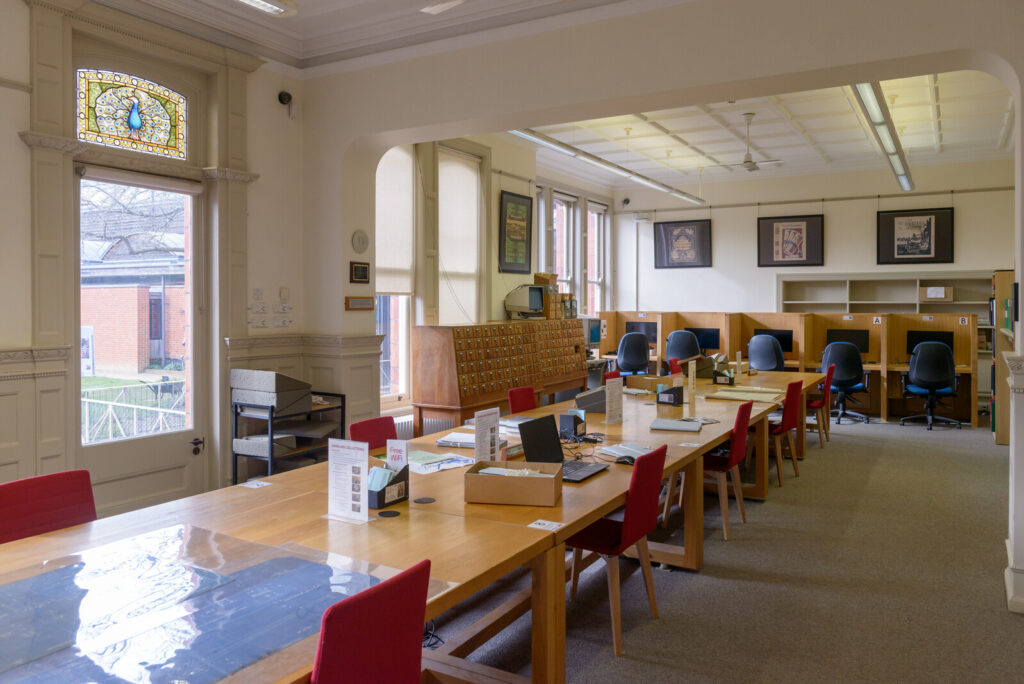
Further Resources
Although the University celebrates its centenary in 2026, records relating to it stretch back further. The first University Extension lectures in Reading were given in 1885 to bring University of Oxford education to people who may not have otherwise been able to access it, and to build on the work of local Schools of Art and Science. Education has taken place on a number of sites across Reading and beyond: from lecture rooms on Valpy Street to farms at Shinfield; at Bulmershe and Greenlands; in Malaysia and South Africa.
The University History Collection consists of large quantities of published and unpublished records, many of which are being made publicly available for the first time this year. This includes a series of online exhibitions co-created with the Friends of the University, and digitised resources on the “Virtual Reading Room”.
The Reading Room at The Museum of English Rural Life, and University of Reading, Special Collections