
University Heritage – London Road Campus

A look at the history of the University of Reading’s London Road campus.
The materials in this online exhibition were compiled by The Friends of the University of Reading as part of their University Heritage leaflet series. For further information about The Friends, including their annual programme of events, list of completed projects and printable copies of the University Heritage leaflets, please visit: thefriends.org.uk
Featured Image: A view of London Road campus from the ‘Old Red Building’ showing the Memorial Tower and the Library [UHC PH3/4/11/37]
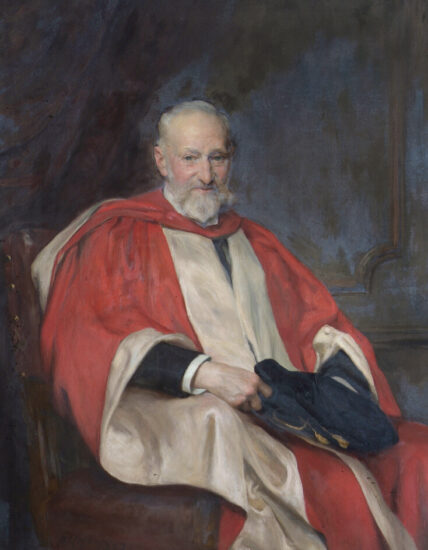
Palmer Family
The University of Reading developed from the foundation in 1892 of an Extension College of the University of Oxford located in Reading town centre in Valpy Street. Expansion of activities led to the Extension College becoming Reading College in 1898 and University College Reading (UCR) in 1902 and a consequent need for more space. An opportunity to move to larger premises came about on the death of George Palmer, co-founder of the Huntley & Palmer biscuit company.
Alfred Palmer, his son, had inherited the family home and grounds on London Road but having no personal use for them he generously leased the entire property consisting of six acres of gardens, three buildings and some smaller ones to UCR in 1904 and donated the freehold in 1911. Another four adjacent acres were already leased for horticultural studies.
(UAC/10056)
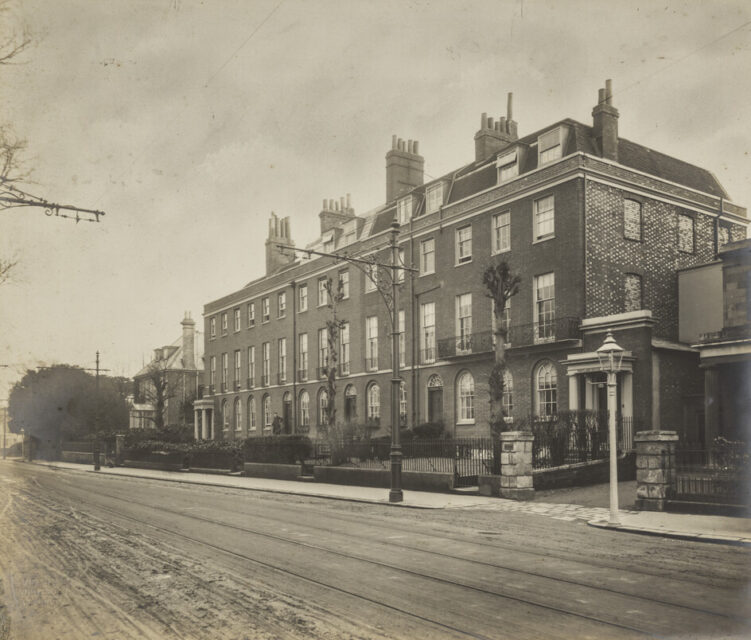
‘Old Red Building’
The three large buildings were Acacias (the family home), Green Bank and a terrace of five dwellings which became known as the ‘Old Red Building’.
The building that became known to the College as the Old Red Building (ORB, illustrated) dates from the beginning of the 19th century when it was built as a terrace of five houses. It provided for activities in Humanities, English, French, Mathematics and Education, and also accommodated Administration and Junior Common Rooms.
(UHC PH3/4/15/2)
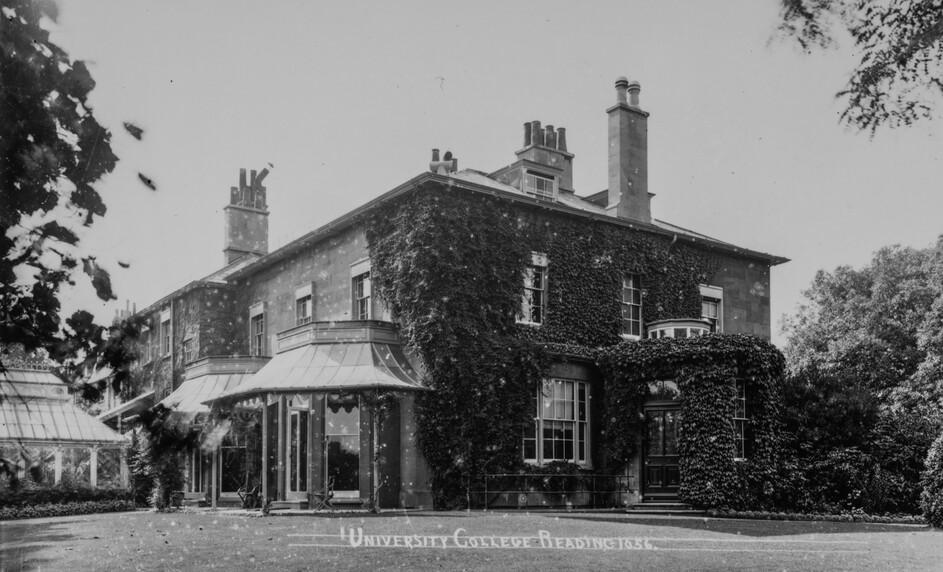
The Acacias & Green Bank
The Acacias, built in 1818 by a local salt merchant, was the family home of George Palmer from 1865 until his death in 1897. He added a bow windowed garden entrance designed by Alfred Waterhouse and a notable L-shaped fernery probably created by James Pulman.
The UCR library was installed on the first floor of the building and the remainder served as the Senior Common Room. The College’s Officer Training Corps used the stables at the original coach entrance in Redlands Road as its Armoury. The adjacent Green Bank (pictured) which dates from the mid 18th century accommodated Music.
(UHC PH3/4/9/7)
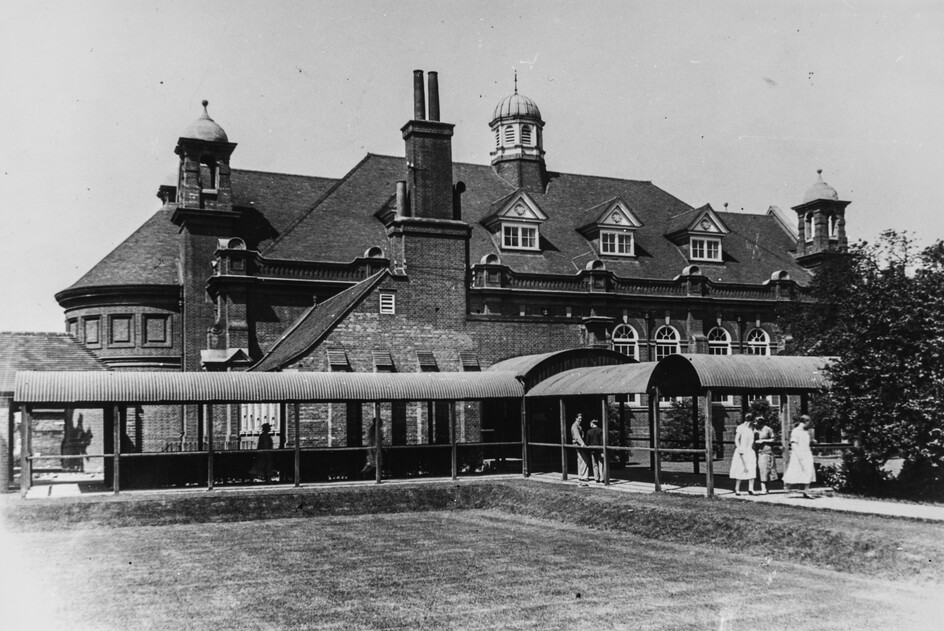
The Great Hall
Work began on designing an assembly hall (the Great Hall) and a series of academic buildings on the east of the site, linked by a cloister, for occupation in 1906.
The Hall was designed by local architect Charles Steward Smith and the foundation stone was laid by Viscount Goschen, Chancellor of the University of Oxford, in 1905. The Great Hall remains the University’s main location for degree congregations, examinations, concerts, lectures and receptions.
Until the new Students’ Union was built in Whiteknights it was also the venue for student events such as dances and hops (Pink Floyd played here), the traditional Jantaculum and Carouse, and productions by the Opera and Drama societies.
(UHC PH3/4/1/16)
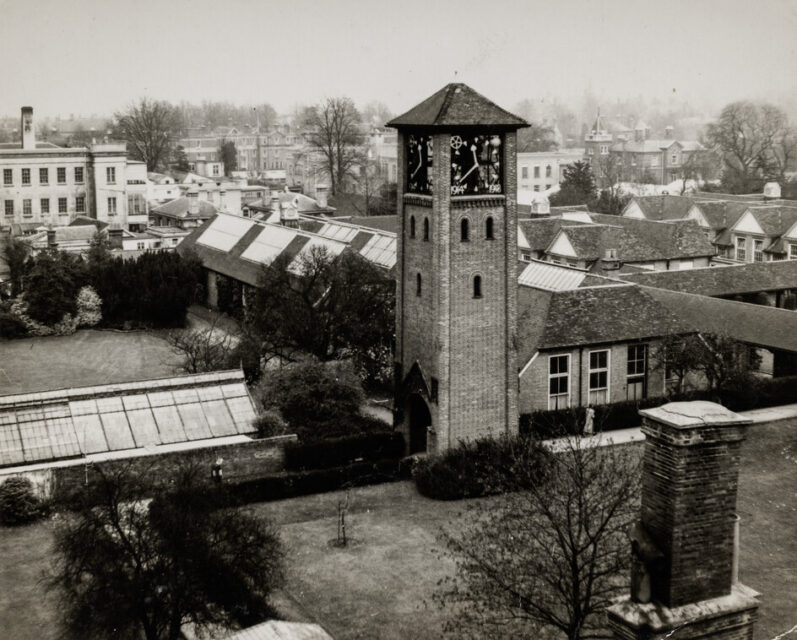
War Memorial Clock Tower
The First World War caused a pause in further development but work resumed in the 1920s with the provision of buildings on the south side alongside Acacias Road, a centrally situated Library, a Buttery and a Memorial Clock Tower to commemorate the 144 members of the College who fell in the First World War.
The Clock Tower also bears the names of those of those who died in the Second World War and later conflicts.
(UHC PH3/4/11/31)
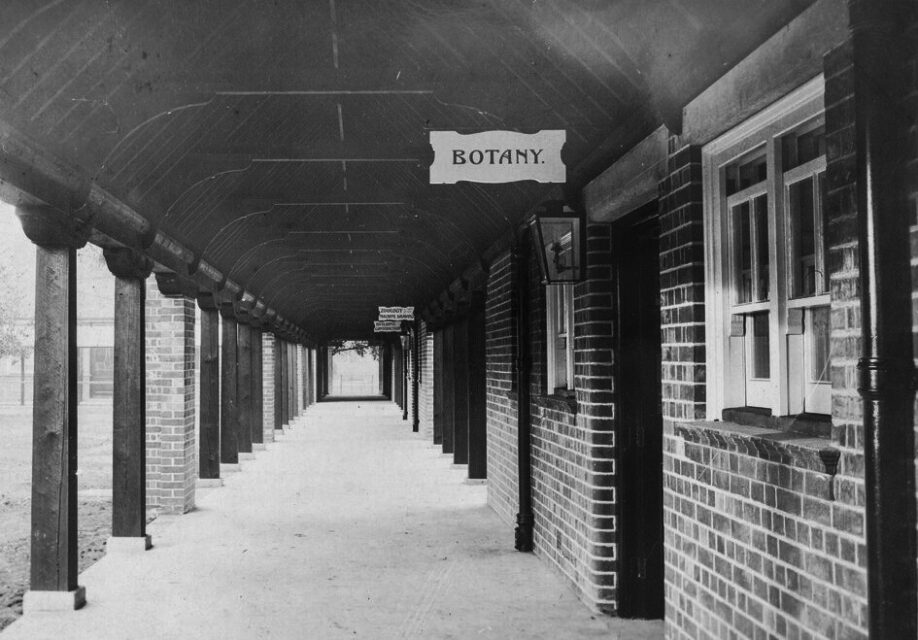
Early Academic Buildings
The first new academic development was a row of separate buildings with intervening gardens along the east boundary of the campus and linked by the East Cloister. The buildings came into use in 1906 for Agriculture, Art, Botany, Chemistry, Crafts, Horticulture, Physics and Zoology followed by an adjacent building for the British Dairy Institute.
During the First World War and in the early 1920s a range of buildings, some temporary in nature and made of rough-cast concrete, was erected along the south and west boundaries for agricultural subjects, Chemistry, Commerce (the ‘Tech Block’) and general teaching purposes.
(UHC PH3/4/11/5)
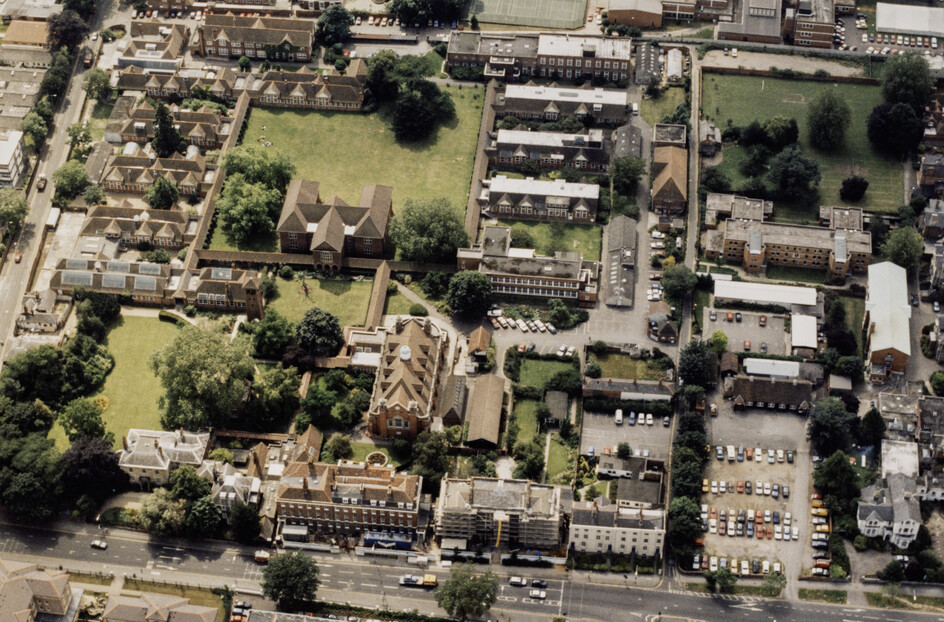
Gyosei International College
The Department of Education moved from London Road to Bulmershe Court in 1989 on its merger with the Berkshire College of Education. The buildings so released (Including the Old Red Building and Mansfield Hall) were purchased by Gyosei International College.
Gyosei International College, later named Witan International College, was established as a residential college for Japanese students studying business and culture studies.
The College closed in 2008 and the University of Reading repurchased the buildings and land.
(UHC PH3/4/11/40)
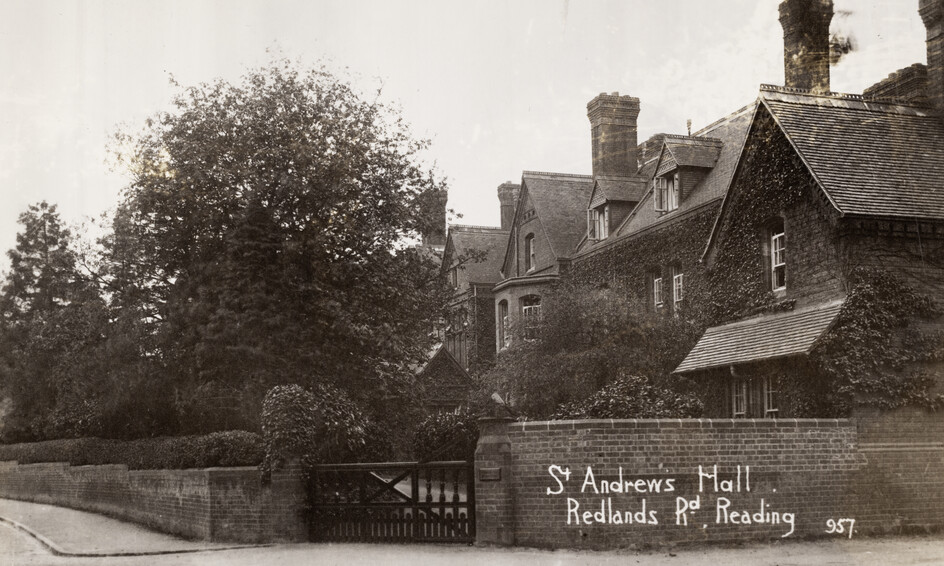
East Thorpe
East Thorpe in Redlands Road was designed in 1880 by Alfred Waterhouse as the family home of Alfred Palmer who extended the house in 1911 and leased it to the University College for use as a women student residence named St Andrew’s Hall. The Hall was closed in 2001 for major refurbishment in preparation for the transfer of The Museum of English Rural Life (The MERL) from Whiteknights in 2004. The original house is listed Grade II.
(UHC PH3/6/7/16)
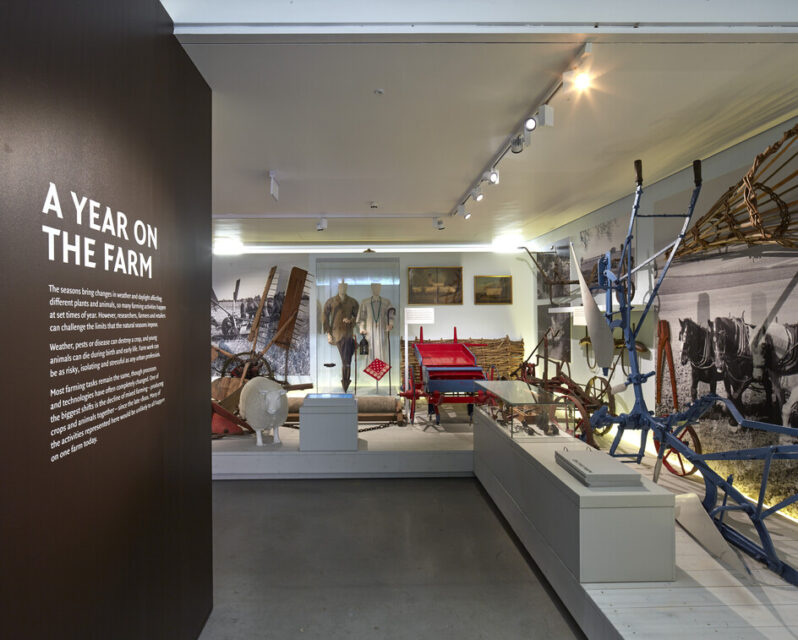
The Museum of English Rural Life
Following the end of the Second World War members of the University’s Department of Agriculture took a particular interest in capturing and recording the ways in which the faces of farming and the countryside were rapidly changing. Redundant items and pieces of equipment that reflected traditional ways of life were collected and stored in a variety of places within the University. As a consequence of this growing interest the University created The Museum of English Rural Life (The MERL) in 1951 to reflect and record the changes. In 1955 the collection was given its first dedicated accommodation at Whiteknights
In 2005 The Museum of English Rural Life moved from Whiteknights to the south side of the campus to London Road’s St Andrew’s Hall, following the closure of Gyosei International College.