
University Heritage – Valpy Street, 1882-1906
Explore the origins of the University of Reading, which began as University Extension College, Valpy Street.
The materials in this online exhibition were compiled by The Friends of the University of Reading as part of their University Heritage leaflet series. For further information about The Friends, including their annual programme of events, list of completed projects and printable copies of the University Heritage leaflets, please visit: thefriends.org.uk
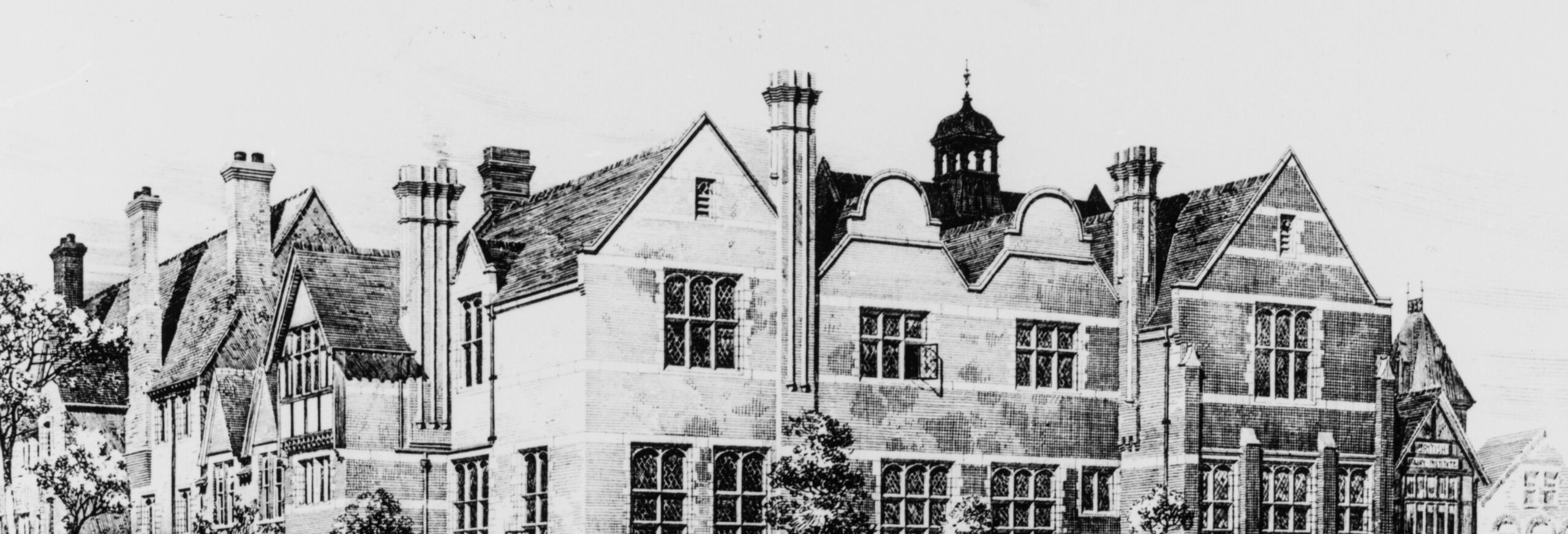
Featured Image: Artist’s impression of the ‘new’ College buildings on Valpy Street [UHC PH3/3/11]
University Extension Movement
During the 1860s, national concern grew over the accessibility and quality of education available for adults. The University Extension Movement began originally at Cambridge University and was widely adopted at Oxford. ‘Extension’ involved an educational institution extending its reach to the local community to provide extramural studies, outreach work or ‘continuing education’. Reading was a beneficiary, becoming one of Oxford’s first and one of its most successful Extension Colleges.
Not only was Reading situated at the heart of an important agricultural region, but it was also halfway between Oxford and London with very good rail links.
(UHC PH3/3/16)
H. J. Mackinder
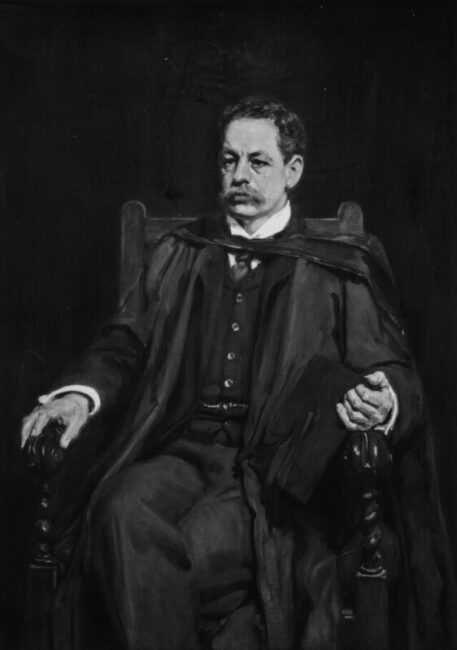
At a meeting of the Reading University Extension Association in May 1892, chaired by Walter Palmer, the Dean of Christ Church, Oxford offered to provide “system and completeness to the Educational work at the centre”, together with the services of H. J. Mackinder one of its Fellows.
Halford John Mackinder (1861–1947) was an English geographer, academic and politician, who is regarded as one of the founding fathers of both geopolitics and geostrategy. He became the first Principal of Reading College in 1892, serving in this role until 1903. After leaving Reading, he became Director of the London School of Economics.
(UHC PH3/1/43/1)
Science and Art Department – Part 1
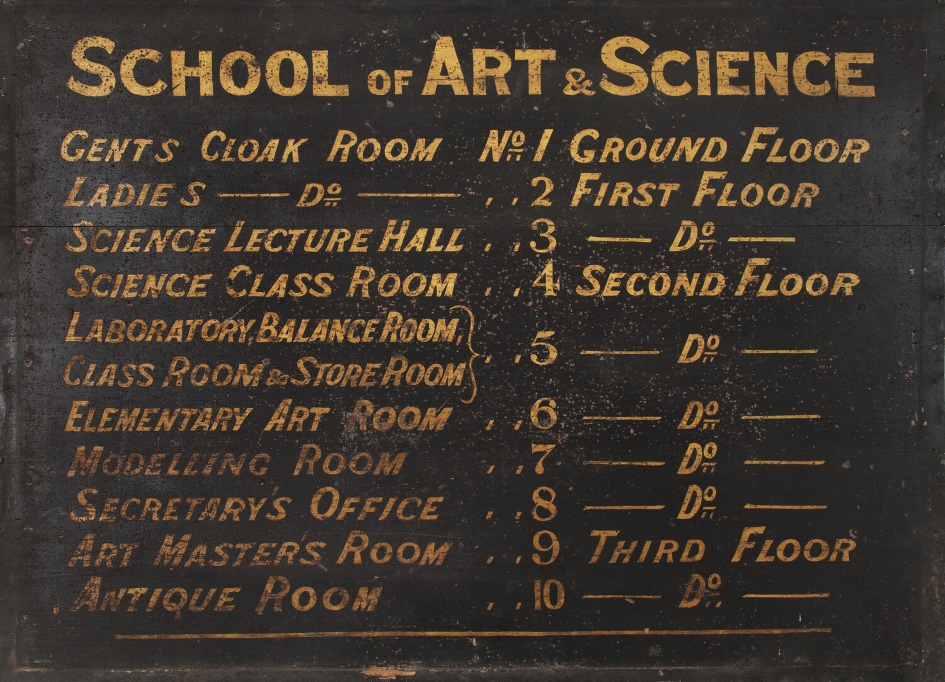
The Science and Art Department was a government body promoting education in art, science, technology and design in Britain and Ireland between 1853 and 1899. The Reading School of Art was established in West Street in 1860 and the School of Science in the old Reading School buildings in Blagrave Street in 1870. Amongst their specialised roles was preparing teachers for examinations held by the Department of Science and Arts in South Kensington. Attention paid to education increased during the 1880s and led to the formation of the Board of Education in 1899 into which the Science and Art Department was integrated.
Science and Art Department – Part 2
The newly-named University Extension College was opened by the Dean of Christ Church on 29 September 1892. The subjects taught in the first year were: history and geography, biology, chemistry and physics, mathematics, the principles of agriculture and the theory of music. There were also courses in building construction, machine drawing and wood carving.
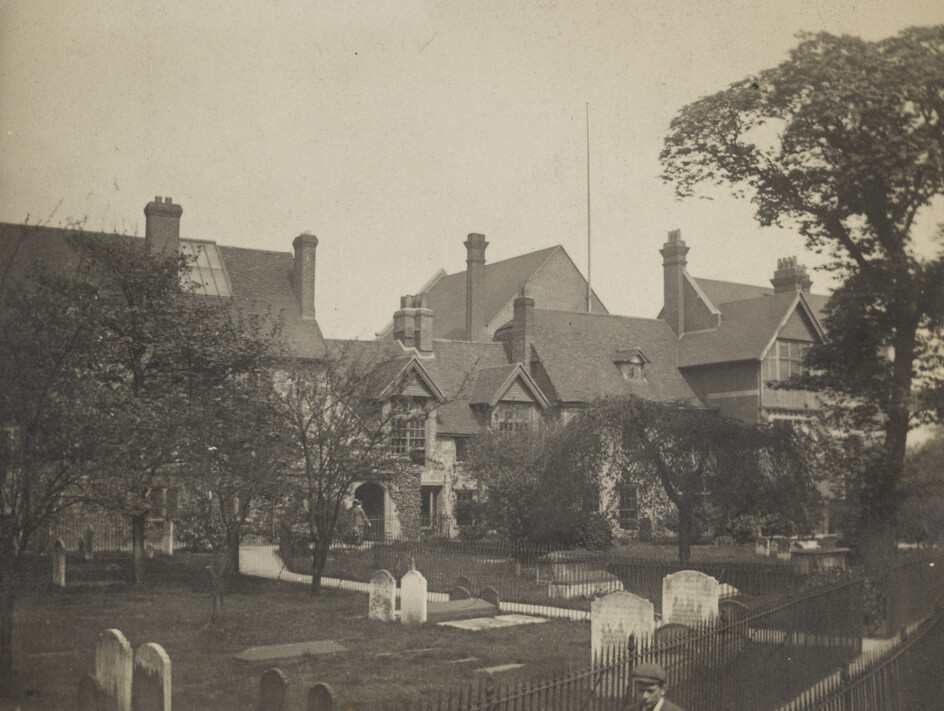
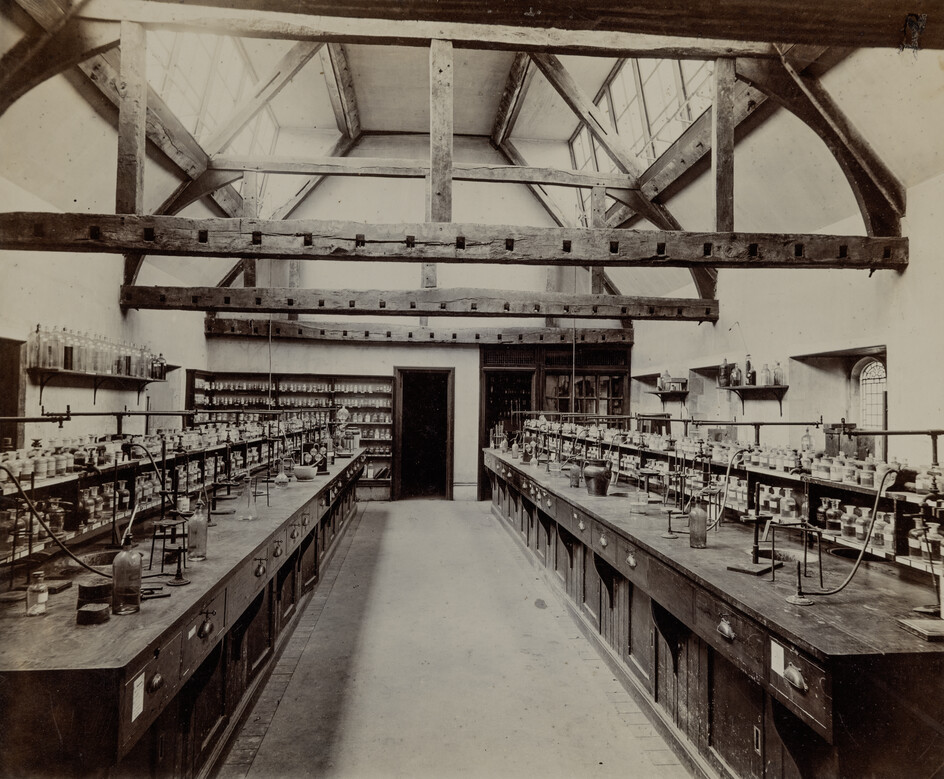
With the merger of the School of Art and the School of Science in 1882, science subjects were taught in the Hospitium. The Chemistry Laboratory was located in the upper part of the building which was dominated by ancient beams. The building is now occupied by the Co-op Nursery, thereby ensuring that its educational use has been retained.
(UHC PH3/3/9)
W. M. Childs
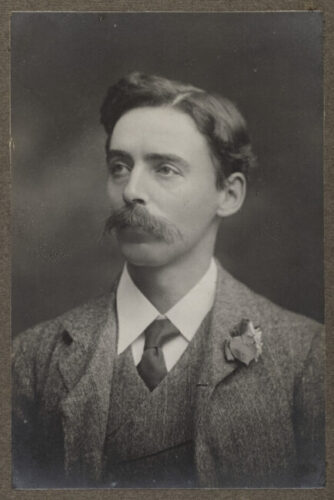
William Macbride Childs (1869-1939) was born in Carrington, Lincolnshire. He graduated from Keble College, Oxford in 1891. In 1893 he became a lecturer in history at the University Extension College, was promoted to Vice-Principal in 1900 and succeeded Halford Mackinder as Principal of the College in 1903. He made it his aim to turn the College into a University and in 1926, when the University of Reading received its charter, he became its first Vice-Chancellor. He retired in 1929, at the age of 60 and died on 21 June 1939. Childs Hall, one of the University’s halls of residence, is named in his honour.
(UHC PH3/1/12/5)
Lady Warwick Hostel – Part 1
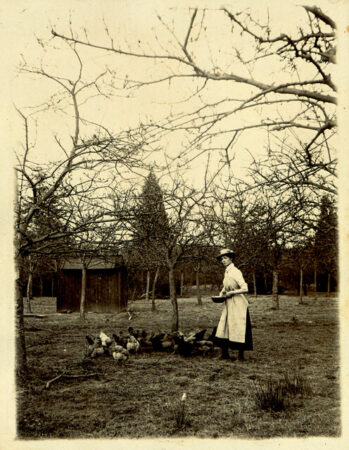
The Countess of Warwick (1861-1938) was a campaigning socialist who supported many schemes to aid the less well off. In 1897 she proposed a scheme for training women in the lighter branches of agriculture with the main purpose to find suitable employment for gentlewomen. In August 1898 she rented Coleyhurst on the Bath Road in Reading which became known as the Lady Warwick Hostel. In October courses began in association with the University Extension College. Students received theoretical instruction at the College, while practical work was done partly in the Hostel’s grounds. The training at ‘The Lady Warwick Hostel’ comprised dairy work, horticulture, market gardening, the marketing of produce, bee-keeping, fruit-growing and poultry farming.
(FR WAR 5/10/1/1)
Lady Warwick Hostel – Part 2
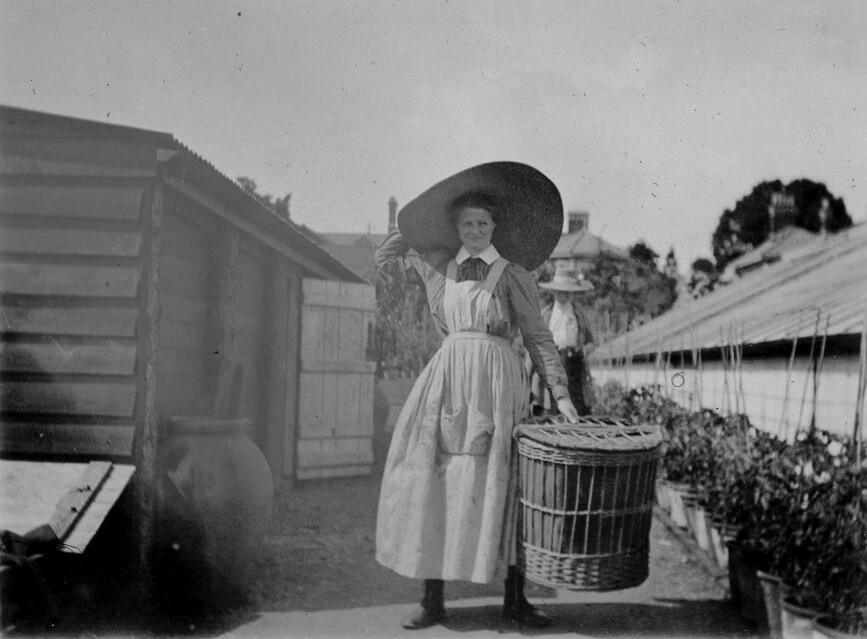
In 1899 two extra houses were opened: Maynard Hostel and Brooke House. In May 1901 Lady Warwick proposed establishing a separate agricultural college for women and in July 1902 the Hostel severed its connection with the College. In 1903 Studley Castle in Warwickshire was purchased for the purpose and in December of that year the students and staff moved there.
(FR WAR 5/10/1/1)
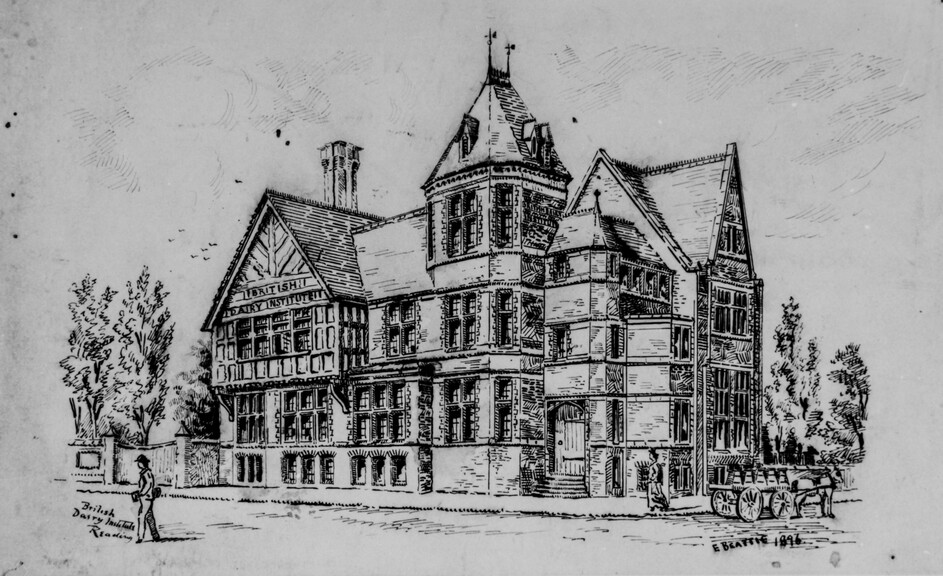
British Institute of Dairying
The British Dairy Farmers’ Association was founded in 1876 as an independent organisation dedicated to the interests of dairy farmers, the improvement of dairy stock, dairy produce and the dairy industry of the UK. The Association established the British Dairy Institute in Aylesbury in 1882 where it ran courses. In 1896 the Institute moved to a new building in the College in Reading. All the College dairy instruction was handed over to the Institute which was placed under the management of a joint committee made up of representatives of the Dairy Farmers’ Association and the College.
The Institute moved to London Road in 1909 and was closed in 1945.
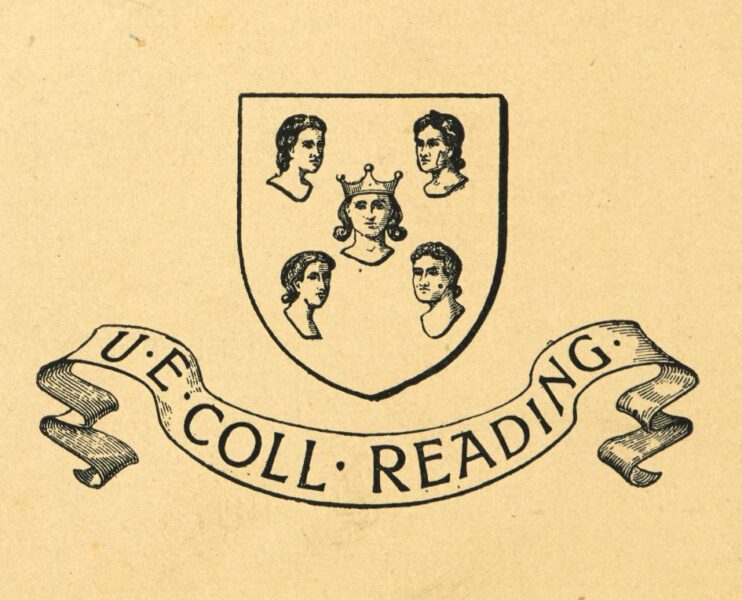
College Coat of Arms
The present coat of arms of the University was granted to the College on 7 August 1896, the cost being paid for by Sir Walter Palmer. Prior to this, the College used several designs based on the Reading Borough coat of arms, granted by Elizabeth I in 1566, which was adapted from a 14th century seal, and featuring the Queen’s head surrounded by four maidens.
(University Extension College: 1892-93 Annual Report)